Iranian nation to never surrender: AEOI chief says
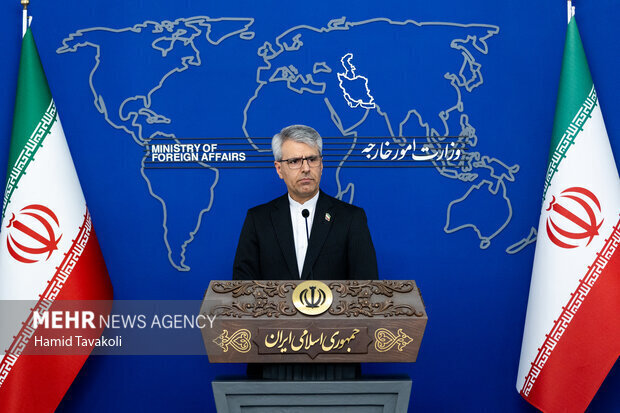
Mohammad Eslami, Head of the Atomic Energy Organization of Iran (AEOI), denounced US threats against Iran's nuclear sites, asserting that the Iranian nation will never surrender under any circumstances.
Intelligence analysis by Gemini 2.5 Flash

Speaking at the 'Ecocide: The Silent War Crime' conference, Eslami highlighted Iran's military strength and its adherence to Islamic teachings by targeting only military objectives. He criticized recent attacks that targeted both nuclear and non-nuclear facilities, including refineries and irradiation centers, emphasizing the severe environmental and humanitarian disregard shown by th…
Imagine a big boss in Iran, named Mohammad Eslami, saying that his country will never give up, even if other countries threaten to attack their special energy places. He said that Iran's army only fights soldiers, not regular people, but that others have attacked places that help people with health and food, which could hurt the environment and everyone.
Analysis
Mohammad Eslami's recent remarks at the 'Ecocide: The Silent War Crime' conference provide a critical insight into Iran's current posture regarding its nuclear program and national security. His strong condemnation of US threats to attack Iranian nuclear sites, coupled with an unwavering declaration that the nation will 'never surrender,' reflects a deeply entrenched resolve within the Iranian leadership. This defiance is not merely rhetorical; Eslami explicitly referenced the capabilities of Iranian combatants and the 'powerful Armed Forces' as having delivered 'firm and harsh responses' to adversaries, suggesting a readiness to defend against perceived aggression.
Mohammad Eslami
Mohammad Eslami, as the Head of the Atomic Energy Organization of Iran (AEOI), holds a pivotal position in articulating Iran's nuclear policy and its defensive strategies. His address at the conference served as a platform to not only denounce external threats but also to differentiate Iran's military ethics from those of its adversaries. Eslami emphasized that Iran's Armed Forces, guided by Islamic teachings, strictly target military objectives and avoid civilian casualties, a claim that contrasts sharply with his accusations against those who have attacked Iranian facilities. This distinction aims to portray Iran as a responsible actor, even in the face of perceived aggression, while simultaneously highlighting the alleged recklessness of its opponents.
Ecocide
The conference theme, 'Ecocide: The Silent War Crime,' provided a potent framework for Eslami's critique of attacks on Iranian infrastructure. He specifically pointed out that recent assaults targeted not only nuclear facilities, which carry inherent risks of 'serious environmental consequences' if damaged, but also non-nuclear sites like refineries, petrochemical complexes, and irradiation centers. These non-nuclear facilities, he noted, are crucial for public services, including healthcare, food safety, and security. By framing these attacks as potential acts of 'ecocide' and a disregard for 'human life, the environment and the rights of future generations,' Eslami sought to elevate the issue beyond mere military confrontation to a matter of international humanitarian and environmental concern, appealing to a broader global conscience.
Atomic Energy Organization of Iran (AEOI)
The AEOI, under Eslami's leadership, is at the heart of Iran's nuclear activities, both peaceful and potentially military-related. Eslami's defense of the organization's facilities underscores their dual importance: their role in Iran's nuclear program and their contribution to civilian sectors. The mention of 'irradiation centers' that use radioactive sources for measurements, safety control, and production monitoring highlights the AEOI's broader scientific and industrial applications. The accusation that attackers showed 'disregard for human life' by targeting such centers suggests that any strike on these facilities would not only impede Iran's strategic capabilities but also directly harm its civilian population and future development, thereby strengthening Iran's narrative of victimhood and justified defense.
Key points
- AEOI chief Mohammad Eslami denounced US threats to attack Iran's nuclear sites, stating the nation will never surrender.
- Eslami emphasized that Iran's Armed Forces target only military objectives, unlike adversaries who have attacked both nuclear and non-nuclear facilities.
- He criticized attacks on facilities like refineries, petrochemical complexes, and irradiation centers, citing their importance for healthcare, food safety, and public security.
- Eslami warned of 'serious environmental consequences' and a disregard for human life and future generations from such attacks.
The ongoing threats against Iran's nuclear and non-nuclear facilities, as highlighted by Eslami, carry a significant risk of escalating regional conflict. Such attacks could lead to severe environmental damage, disrupt essential public services, and potentially trigger a broader humanitarian crisis, further destabilizing the Middle East.
Market signals
- OIL Threats to Iranian facilities, including refineries and petrochemical complexes, could disrupt energy supply and increase geopolitical risk premiums on crude oil.
AI-generated analysis of potential market relevance. Not financial advice.