Isaias lashes Southeast after making landfall in the U.S.
Hurricane Isaias made landfall near Destin, Florida, as a Category 2 storm, later weakening to a post-tropical cyclone, but still caused widespread power outages and flooding across the U.S. Southeast.
Intelligence analysis by Gemini 2.5 Flash
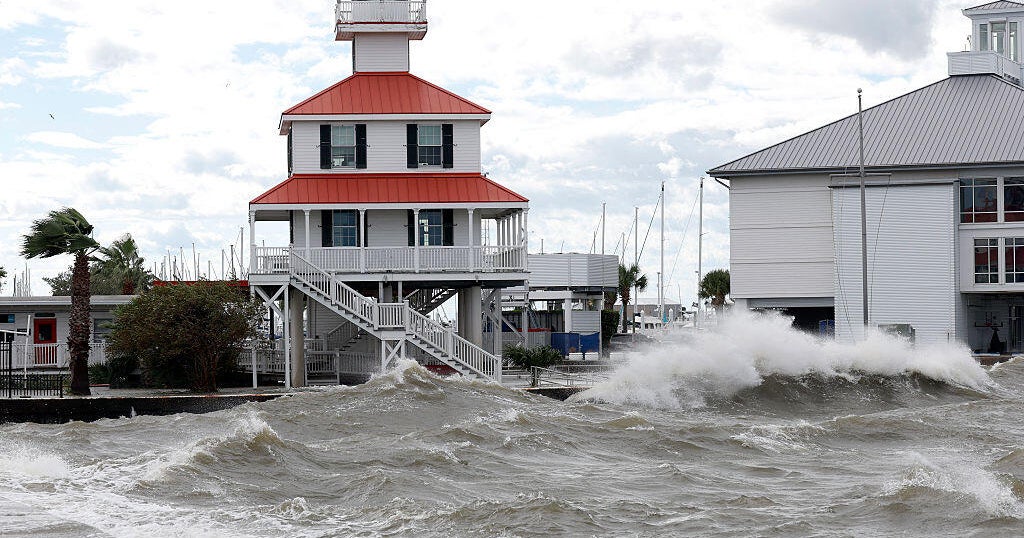
Isaias, the first hurricane of the 2026 Atlantic season, struck the northern Gulf Coast, bringing powerful winds, flash flooding, and storm surges. It left hundreds of thousands without power across Florida, Alabama, and Georgia, prompting federal and state emergency declarations.
Imagine a big, windy, rainy monster named Isaias that crashed into the bottom part of America, near Florida. It was super strong at first, like a really fast wind, and it knocked out the lights for hundreds of thousands of people, making it hard to see at night. Even though it got a bit weaker quickly, it still caused lots of puddles and messy roads, so grown-ups had to declare emergencies to help everyone stay safe and fix things up.
Analysis
Destin, Florida
Isaias made its initial landfall near Destin, Florida, on Friday night as a Category 2 hurricane, marking it as the first hurricane of the 2026 Atlantic season to hit the U.S. Gulf Coast. Despite strengthening to a Category 3 with 120 mph winds prior to landfall, the storm rapidly weakened to a post-tropical cyclone within hours, with maximum sustained winds dropping to 65 mph by early Saturday morning. This rapid weakening led to the cancellation of all hurricane warnings, though storm surge and tropical storm warnings remained in effect for parts of Florida.
The immediate aftermath in the Florida Panhandle included flooded roads in Destin and debris-strewn streets in Pensacola, prompting police warnings for residents to stay indoors. Reports from residents, like Tim Mowry in Pensacola, described intense winds sounding like a train whistle. While the full extent of the damage was not immediately clear, social media posts showed downed trees, power lines, and even a roof being torn off an inn, indicating significant localized destruction.
834,061 Customers
The most immediate and widespread impact of Isaias was the extensive power outages across the Southeast. Early Saturday morning, a staggering 834,061 customers were without electricity across three states. Florida bore the brunt of these outages, with 436,443 customers affected, primarily in the Panhandle region where the storm made landfall. Alabama followed with 314,540 customers in the dark, and Georgia reported 83,078 customers without power.
These outages underscore the vulnerability of infrastructure to severe weather events, even as the storm weakened. The loss of power significantly disrupts daily life, impacting communication, heating/cooling, and access to essential services. For many, like Tim Mowry, generators provided a temporary solution, but the sheer scale of the outages suggests a prolonged period of restoration for many affected communities.
Markwayne Mullin
In response to the impending and actual impacts of Isaias, both federal and state governments swiftly issued emergency declarations. The Trump administration approved federal emergency declarations for Florida and Alabama on Friday night, enabling the Federal Emergency Management Agency (FEMA) to provide federal disaster assistance. This support is crucial for supplementing state, tribal, and local response efforts in managing the emergency conditions caused by the storm.
State governors also took proactive measures. Florida Gov. Ron DeSantis declared a state of emergency for over two dozen counties, while Alabama Gov. Kay Ivey issued a state of emergency for 40 counties, urging coastal visitors to evacuate. Georgia Gov. Brian Kemp also declared a state of emergency. DHS Secretary Markwayne Mullin affirmed that DHS and FEMA were ready to support these state-led efforts, highlighting the coordinated governmental response to mitigate the storm's impact and aid in recovery.
Key points
- Hurricane Isaias made landfall near Destin, Florida, as a Category 2 storm.
- The storm quickly weakened to a post-tropical cyclone but still brought powerful winds and flooding.
- Over 834,061 customers across Florida, Alabama, and Georgia lost power.
- Federal and state emergency declarations were approved to aid response efforts.
- Isaias was expected to miss major Gulf Coast oil hubs, but fuel prices could still rise due to refinery power outages.
The rapid weakening of Isaias from a Category 2 hurricane to a post-tropical cyclone shortly after landfall meant that hurricane warnings were canceled, potentially limiting the most severe wind damage. Furthermore, the storm was expected to miss the major oil industry hubs along the Gulf Coast, which could prevent broader disruptions to fuel supply and prices.
Despite weakening, Isaias caused significant immediate disruption, with hundreds of thousands of customers losing power across three states and reports of widespread flooding and debris. The potential for fuel prices to rise if power outages affect crude processing refineries also presents a realistic downside risk for consumers.
Market signals
- OIL Fuel prices could rise if power outages from the storm shut down refineries for processing crude, according to industry experts.
AI-generated analysis of potential market relevance. Not financial advice.