Leading economies' borrowing costs hit highest since 2008 crisis
Government borrowing costs in several advanced economies hit their highest level since the 2008 financial crisis, as investors feared the Middle East crisis would keep inflation persistently high.
Intelligence analysis by Llama
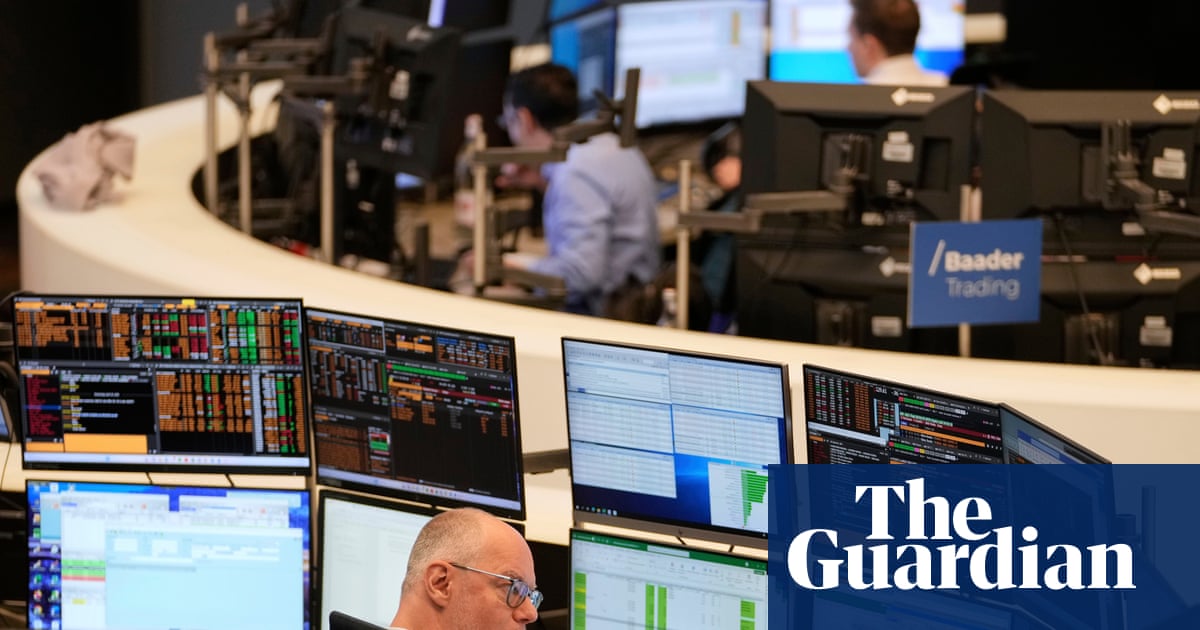
Concerns over rising prices and government spending pushed up the cost of debt issued by Paris, Berlin, Washington DC, Tokyo and London as investors fretted that rising prices would push up interest rates.
Imagine you're lending money to a friend, but you're not sure if they'll be able to pay you back. That's kind of what's happening with government borrowing costs. Investors are worried that the Middle East crisis will keep inflation high, so they're demanding higher interest rates to compensate for the risk. This makes it more expensive for governments to borrow money, which can have a ripple effect on the economy.
Analysis
Global Economic Uncertainty
The recent surge in government borrowing costs in several advanced economies has sent shockwaves through the global financial markets. The yields on 30-year French bonds rose to their highest level since September 2008, while the equivalent German bond yield hit its highest level since 2011. This increase in borrowing costs is a direct result of investors' fears that the ongoing Middle East crisis will keep inflation persistently high. The money markets indicate there is almost an 85% chance that the European Central Bank will raise interest rates in September, further exacerbating the situation.
Central Banks' Dilemma
Central banks are facing a daunting task in balancing inflation and economic growth. The ongoing Middle East crisis has pushed oil prices up by 6% last week, and Brent crude rose higher on Monday as the US and Iran struggled to end the conflict. This has significant implications for central banks, as they struggle to contain inflation while also supporting economic growth. The Bank of Japan, for instance, is expected to raise interest rates as soon as September in an attempt to prop up the value of the yen.
Market Impact
The increase in government borrowing costs has significant implications for the global financial markets. The 30-year Treasury yield in the US rose to its highest level since 2007, while the UK and Italian government bond prices dipped. Japan's 10-year government bond yield hit a three-decade high, as investors anticipated the Bank of Japan would need to raise interest rates to contain inflation.
Key points
- Government borrowing costs in several advanced economies hit their highest level since the 2008 financial crisis.
- Investors feared the Middle East crisis would keep inflation persistently high.
- The increase in borrowing costs has significant implications for central banks.
- The Bank of Japan is expected to raise interest rates as soon as September to contain inflation.
- Japan's 10-year government bond yield hit a three-decade high.
If the Middle East crisis is resolved soon, interest rates may decrease, and government borrowing costs may come down. This could lead to a boost in economic growth and a decrease in inflation.
If the Middle East crisis continues, interest rates may remain high, and government borrowing costs may continue to increase. This could lead to a decrease in economic growth and an increase in inflation.