Liberals re-examine gender quotas in slew of proposals to make party ‘fit-for-purpose political machine’
The Liberal party is considering gender quotas to increase the number of women in its parliamentary ranks, which it says is critical to the long-term survival of the movement. The party's discussion paper canvasses options to renew the party's ageing membership base, sele…
Intelligence analysis by Llama
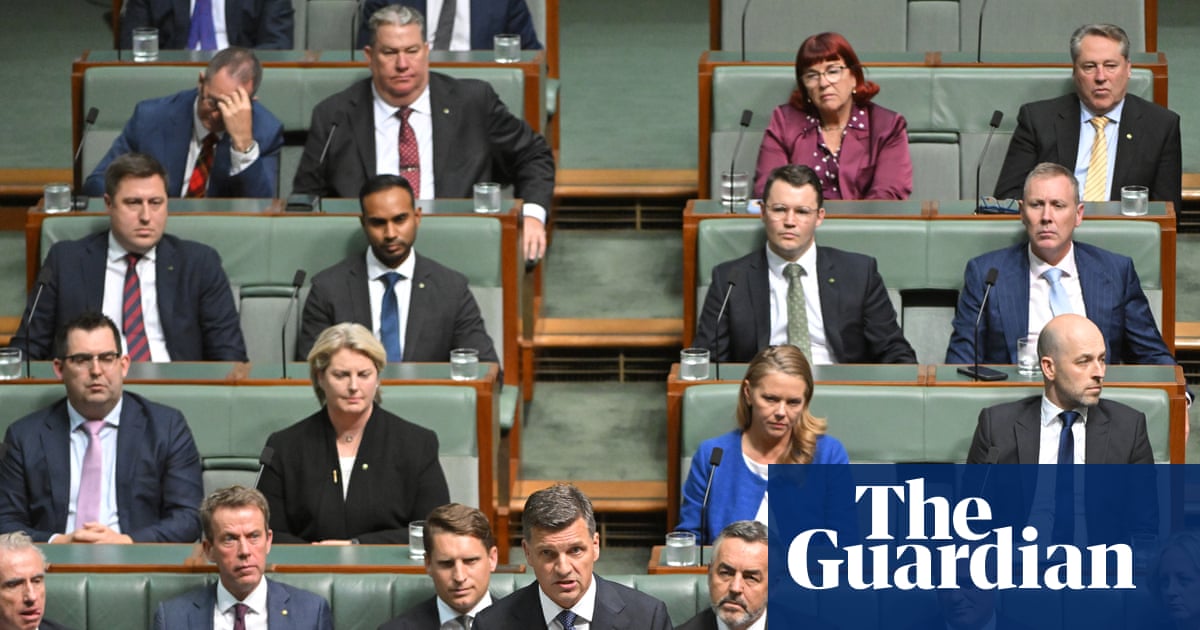
The Liberal party is considering gender quotas to increase the number of women in its parliamentary ranks. The party's discussion paper canvasses options to renew the party's ageing membership base, select 'competitive candidates', better engage with multicultural communities and young people, and improve its internal structures and campaigning.
The Liberal party is trying to figure out how to get more women to join their team. They want to make sure their team looks like the people they're trying to represent. They're thinking about things like making sure women have a fair chance of getting chosen to run for office, and making sure they're not being left out of important decisions.
Analysis
A $60B Vote of Confidence
The Liberal party's discussion paper highlights the need for urgent action to address the party's struggle to attract and retain women in its parliamentary ranks. The paper notes that the party's parliamentary team is not representative of the average Australian, with just 33% of Liberal and (Queensland LNP) parliamentarians across the country being women. The paper also notes that men outnumber women four-to-one in the lower house in Canberra.
The discussion paper canvasses options to renew the party's ageing membership base, including $10 annual memberships targeted at time-poor professionals and parents. More than 55% of the Liberal membership is over 60, according to internal figures published in the report. The paper also considers the need to win back multicultural communities and young voters, two of the major groups that abandoned the party at the 2022 and 2025 ballots.
The paper notes that the negative perceptions of the Liberal party within multicultural communities are 'deep-rooted', and that some of its federal policies have been 'misappropriated by opponents as hostile or racist'. The report also notes that many young Australians view the Liberal party as 'less credible' on issues important to them, including climate action.
The discussion paper floats six options, making a 'for' and 'against' argument for each without offering any recommendation. The options include gender quotas, US-style 'open primaries', a local version of the UK Conservative's 'A-list', giving 'bonus weighting' to female candidates, mandating a minimum number of women to contest preselection ballots, and requiring state divisions to set female candidate targets in winnable seats.
The argument in favour of gender quotas is that existing models - including Labor's - have improved the gender balance of that party over time. The argument against is that quotas override merit-based selection, which the paper says is 'contrary to Liberal values'.
The discussion paper also considers the need to improve the party's internal structures and campaigning. The paper notes that the party's campaign resources are stretched, and that the party needs to 'instill message discipline' to ensure that its positions are not being exploited by opponents.
Overall, the discussion paper highlights the need for urgent action to address the Liberal party's struggle to attract and retain women in its parliamentary ranks. The paper canvasses options to renew the party's ageing membership base, select 'competitive candidates', better engage with multicultural communities and young people, and improve its internal structures and campaigning.
Key points
- The Liberal party is considering gender quotas to increase the number of women in its parliamentary ranks.
- The party's discussion paper canvasses options to renew the party's ageing membership base, select 'competitive candidates', better engage with multicultural communities and young people, and improve its internal structures and campaigning.
- The paper notes that the negative perceptions of the Liberal party within multicultural communities are 'deep-rooted', and that some of its federal policies have been 'misappropriated by opponents as hostile or racist'.
- The report also notes that many young Australians view the Liberal party as 'less credible' on issues important to them, including climate action.
If the Liberal party is successful in implementing gender quotas and other measures to increase the number of women in its parliamentary ranks, it could lead to a more representative and diverse team. This could help the party to better understand and address the needs of women and other underrepresented groups, and to develop policies that are more inclusive and equitable.
If the Liberal party is unable to implement meaningful reforms to increase the number of women in its parliamentary ranks, it could lead to further decline and irrelevance. The party's struggle to attract and retain women in its parliamentary ranks is a critical issue for the party's long-term survival, and failure to address it could have serious consequences.