Madras High Court Questions RSS Route March Ban in Tamil Nadu, Citing Jammu and Kashmir Precedent
The Madras High Court questioned Tamil Nadu Police's repeated denial of permission for an RSS route march, noting that similar marches are allowed even in Jammu and Kashmir.
Intelligence analysis by Gemini 2.5 Flash
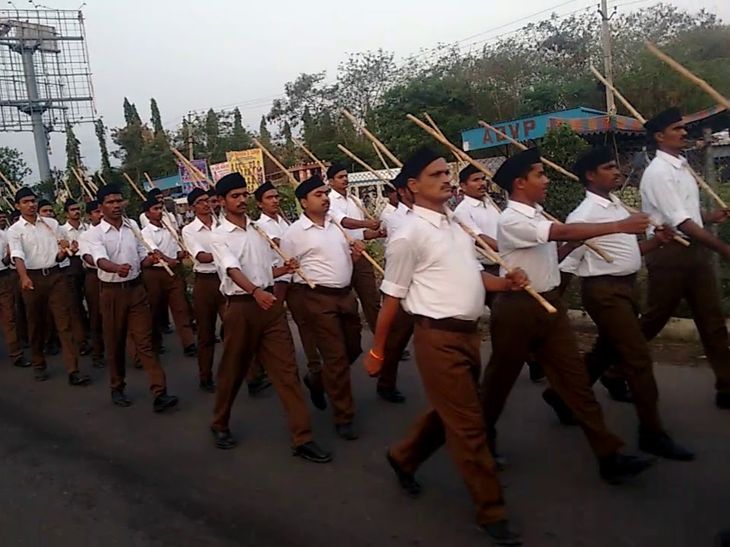
During a hearing on a petition by an RSS member, Justice V. Lakshminarayanan criticized the Tamil Nadu government for consistently blocking processions, forcing organizations to seek judicial intervention. The court highlighted the inconsistency of denying permission in Tamil Nadu while allowing RSS marches in a terrorism-affected region like Jammu and Kashmir.
Imagine a club that wants to have a parade, but the police in one state keep saying no, even though the same club can have parades in other, sometimes even trickier, places. A judge is now asking the police, 'Why do you always say no here, but let them march elsewhere?' because it seems unfair.
Analysis
The Madras High Court's recent observations regarding the denial of permission for an RSS route march in Tamil Nadu bring to the forefront a recurring legal and political debate in India. The court, through Justice V. Lakshminarayanan, expressed strong reservations about the Tamil Nadu Police's consistent refusal to grant permission for such processions. This judicial scrutiny highlights a pattern where organizations are compelled to approach the judiciary to exercise their right to assembly, suggesting a potential overreach or arbitrary application of power by the state administration.
Madras High Court
The Madras High Court's stance in this matter is a critical assertion of judicial oversight over executive actions. Justice V. Lakshminarayanan specifically questioned the rationale behind denying permission in Tamil Nadu, drawing a pointed comparison with Jammu and Kashmir. The judge remarked that if the RSS can conduct marches in a region historically affected by terrorism, there is little justification for a blanket ban in Tamil Nadu. This comparison serves to underscore the perceived inconsistency and potential bias in the state police's decision-making process, pushing for greater transparency and adherence to constitutional principles regarding public gatherings.
Tamil Nadu Police
The Tamil Nadu Police's repeated denial of permission for the RSS route march has been a contentious issue, leading to multiple legal challenges. The court's questioning implies that the police's reasons for refusal may not be sufficiently robust or consistent with practices in other parts of the country. The observation that the 'current state government is stopping permission for every procession' suggests a broader policy rather than case-specific security concerns. This pattern of denial not only strains relations between the state and various organizations but also places a burden on the judicial system, which is increasingly called upon to mediate such disputes.
V.G. Jagadeesan
The specific petition that prompted these judicial remarks was filed by V.G. Jagadeesan, an RSS member. His plea sought permission for the route march on several proposed dates: October 18, October 25, November 1, or any other suitable date. The fact that an individual member had to resort to legal action to secure permission for a public event underscores the challenges faced by organizations in exercising their rights in Tamil Nadu. The court's intervention in this particular case could set a precedent for future applications, potentially influencing how the state police handle requests for public gatherings from various groups, ensuring a more equitable and rights-respecting approach.
Key points
- Madras High Court questioned Tamil Nadu Police's denial of permission for an RSS route march.
- Justice V. Lakshminarayanan highlighted that RSS marches are permitted in Jammu and Kashmir, a terrorism-affected region.
- The court noted a pattern of the current state government blocking processions, forcing organizations to seek judicial intervention.
- The oral observation was made during the hearing of a petition filed by RSS member V.G. Jagadeesan.
- Jagadeesan sought permission for a march on October 18, October 25, November 1, or another date.