Middle powers don’t have to wait for a Trump-Xi-Putin summit
An opinion piece argues that middle powers can actively shape the international order by deepening cooperation, rather than passively awaiting decisions from great powers like the US, China, and Russia.
Intelligence analysis by Gemini 2.5 Flash
The article challenges the traditional view that global order is managed solely by great powers, using the potential Trump-Xi-Putin summit as a backdrop. It advocates for middle powers to assert their agency by fostering connections between various 'hubs of cooperation' across trade, technology, and development.
Imagine the world is like a big playground, and some big kids usually decide all the games. This story says that the other kids, who aren't the biggest, don't have to just wait for the big kids to make all the rules. Instead, they can team up with each other in different groups to play their own games and make their own rules, helping everyone get along better without just relying on the biggest kids.
Analysis
The article posits a significant shift in global power dynamics, challenging the traditional notion that international order is solely managed by a handful of great powers. The author, Hao Nan, introduces the "Yalta analogy" in the context of a potential Trump-Xi-Putin summit, suggesting a historical parallel to the 1945 meeting that reshaped the post-World War II world. However, the piece quickly pivots to argue that such a great-power-centric view is increasingly outdated, especially as trade, technology, finance, infrastructure, and development are already being organized through complex great-power bargains and rivalries. This framing sets the stage for the central argument: middle powers possess agency and do not need to passively await the outcomes of top-level superpower negotiations.
Yalta Analogy
The "Yalta analogy" serves as a historical touchstone, evoking a period when a few dominant nations dictated the global order. The article notes that talk of a Trump-Xi-Putin summit, reminiscent of the 1945 Yalta Conference, has resurfaced, particularly with the 80th anniversary of World War II. This symbolism of three leaders around one table, as the international order fragments, highlights an enduring belief that disorder is ultimately managed by a select group of powerful states. However, the author implies that while the symbolism is potent, a literal 21st-century Yalta is improbable, suggesting that the underlying logic of great-power dominance is being challenged by contemporary realities.
Apec Summit in Shenzhen
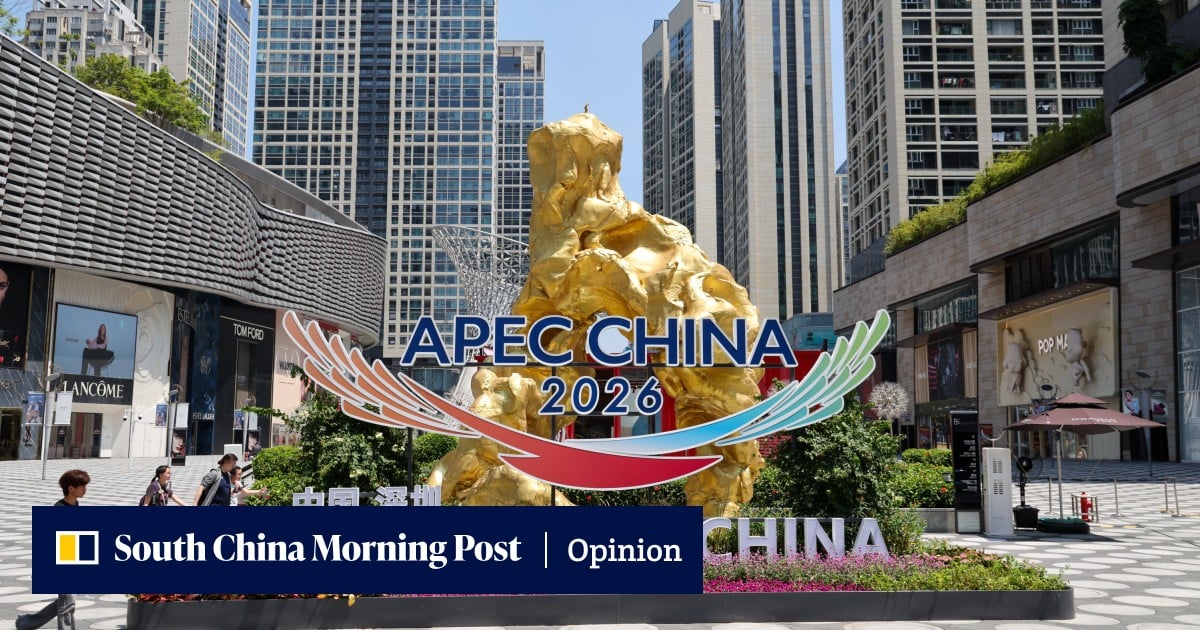
The prospect of a United States, Chinese, and Russian leaders' meeting at the Asia-Pacific Economic Cooperation (Apec) summit in Shenzhen this November is presented as the immediate trigger for this discussion. While a three-way meeting has been speculated and even suggested by Moscow, the article uses this potential event not as a definitive outcome, but as a catalyst for re-evaluating global governance. The fact that Chinese President Xi Jinping hosted the other two presidents back-to-back in Beijing earlier in May further underscores the ongoing diplomatic dance among these major players. The Apec summit, therefore, becomes a symbolic stage where the tension between great-power orchestration and middle-power autonomy could play out.
Hubs of Cooperation
Central to the article's thesis is the idea that middle powers can assert their agency by deepening connections between "hubs of cooperation." This concept suggests a decentralized approach to global governance, where various regional or thematic groupings can collectively influence international affairs without waiting for directives from the traditional great powers. By fostering these connections, middle powers can create alternative frameworks for managing global challenges in areas like trade, technology, and development. This strategy offers a pathway for these nations to actively shape the international order, rather than merely reacting to the bargains and rivalries of the dominant states, thereby promoting a more distributed and resilient global system.
Key points
- The article challenges the belief that global disorder is solely managed by great powers.
- A potential Trump-Xi-Putin summit at the Apec meeting in Shenzhen revives the 'Yalta analogy'.
- Middle powers are encouraged to find agency by deepening connections between 'hubs of cooperation'.
- Trade, technology, finance, infrastructure, and development are increasingly organized through great-power rivalries.
- The author suggests a decentralized approach to global governance through middle-power collaboration.
If middle powers successfully deepen connections and cooperation, they could foster a more resilient and distributed international order. This approach could lead to more inclusive global governance, reducing reliance on the often-contentious dynamics between a few great powers and potentially leading to more stable solutions for global challenges.
If middle powers fail to effectively coordinate or assert their agency, the international order risks further fragmentation under the increasing rivalries of great powers. This could lead to continued instability, with critical global issues being managed through competitive bargains rather than collaborative solutions, leaving smaller nations with less influence.