Ministers drop plan to relax affordable housing rules after negative response
Ministers have dropped plans to relax affordable housing rules for developers in England after a backlash from housing experts who warned it could drastically cut the number of cheaper homes available in rural areas.
Intelligence analysis by Llama
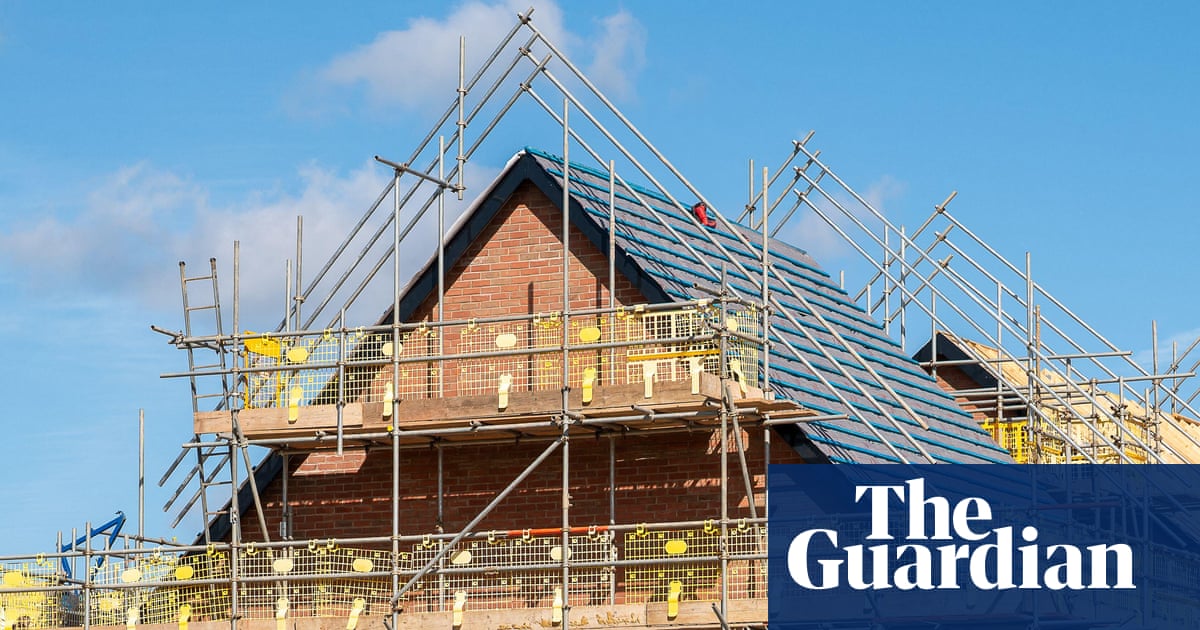
The government has scrapped proposals to end affordable housing quotas for private builders on sites containing between 10 and 49 houses after a consultation triggered an overwhelmingly negative response.
Imagine you're looking for a house in a small village. You want a home that's affordable, but the government wants to make it easier for builders to charge more money for houses. This would mean fewer affordable homes for people who need them. Luckily, the government listened to experts and decided not to make this change.
Analysis
Government Concessions on Affordable Housing Rules
The government's decision to drop plans to relax affordable housing rules for developers in England is a significant reversal of their previous stance. The move comes after a consultation triggered an overwhelmingly negative response from housing experts, who warned that the proposed changes could drastically cut the number of cheaper homes available in rural areas.
The original proposals would have allowed developers to make cash payments instead of building affordable housing on-site if their developments were between 10 and 49 houses. However, housing experts argued that such a rule change would have a major impact, especially in rural areas where a significant number of affordable homes are built on medium sites rather than larger ones.
An analysis of government statistics by the National Housing Federation (NHF) revealed that in the most rural areas of England, more than half of all affordable homes are built on developments of this size. The organisation said the policy change could cost the country 32,000 affordable homes over the next 10 years.
The government document reveals that of the 910 people and groups who responded to the consultation, 41% were strongly opposed to the measure, compared with just 18% who were strongly in favour. The document said: 'There was significant opposition across stakeholder groups.'
The government has considered these responses and has decided not to proceed with proposals to allow applicants discretion to deliver social and affordable housing requirements via cash payments in lieu of on-site delivery on medium sites. This reflects concerns that, at this time, it could have a detrimental impact on the manifesto commitment to deliver the biggest increase in social and affordable housebuilding in a generation and to strengthen planning obligations to ensure new developments provide more affordable homes.
Ministerial Reactions
Angela Rayner, the housing secretary, said on Monday: 'I'm very clear that we need these homes. We have already seen nearly 400,000 since we came into office, new homes that have completed. We've seen a 15% increase in start-ups for housing starts.'
Rayner added: 'We want to continue on that path and that's why we've set out these rules to make sure that we can get planning through as quickly as possible, and we can get the infrastructure alongside the housing that we desperately need.'
Implications for Rural Housing
The decision to scrap the proposals will have significant implications for rural housing. The NHF has argued that the policy change could cost the country 32,000 affordable homes over the next 10 years. The organisation has also pointed out that in the most rural areas of England, more than half of all affordable homes are built on developments of this size.
The government's decision to listen to the concerns of housing experts and scrap the proposals is a positive step forward. It ensures that one of the most important routes for delivering social homes in rural areas will be safeguarded, and that we can build genuinely affordable homes where people need them, in every postcode across the country.
Key points
- Ministers have dropped plans to relax affordable housing rules for developers in England after a backlash from housing experts.
- The government has scrapped proposals to end affordable housing quotas for private builders on sites containing between 10 and 49 houses.
- The decision will safeguard one of the most important routes for delivering social homes in rural areas.
- The government's failure to deliver on its manifesto commitment to build 1.5m new homes by the end of this parliament remains a concern.
- The lack of affordable housing options in rural areas will continue to be a major issue.
The government's decision to scrap the proposals is a positive step forward. It ensures that one of the most important routes for delivering social homes in rural areas will be safeguarded, and that we can build genuinely affordable homes where people need them, in every postcode across the country. This decision will help to address the housing crisis and provide more affordable homes for people who need them.
The decision to scrap the proposals does not address the underlying issues with the housing market. The government's failure to deliver on its manifesto commitment to build 1.5m new homes by the end of this parliament remains a concern. The lack of affordable housing options in rural areas will continue to be a major issue, and the government must take further action to address this problem.