North Korea’s Kim launches second nuclear destroyer as US-South Korea-Japan drills start
North Korean leader Kim Jong-un has commissioned a second nuclear-capable destroyer, the Kang Kon, amid ongoing trilateral military drills by the US, South Korea, and Japan.
Intelligence analysis by Gemini 2.5 Flash
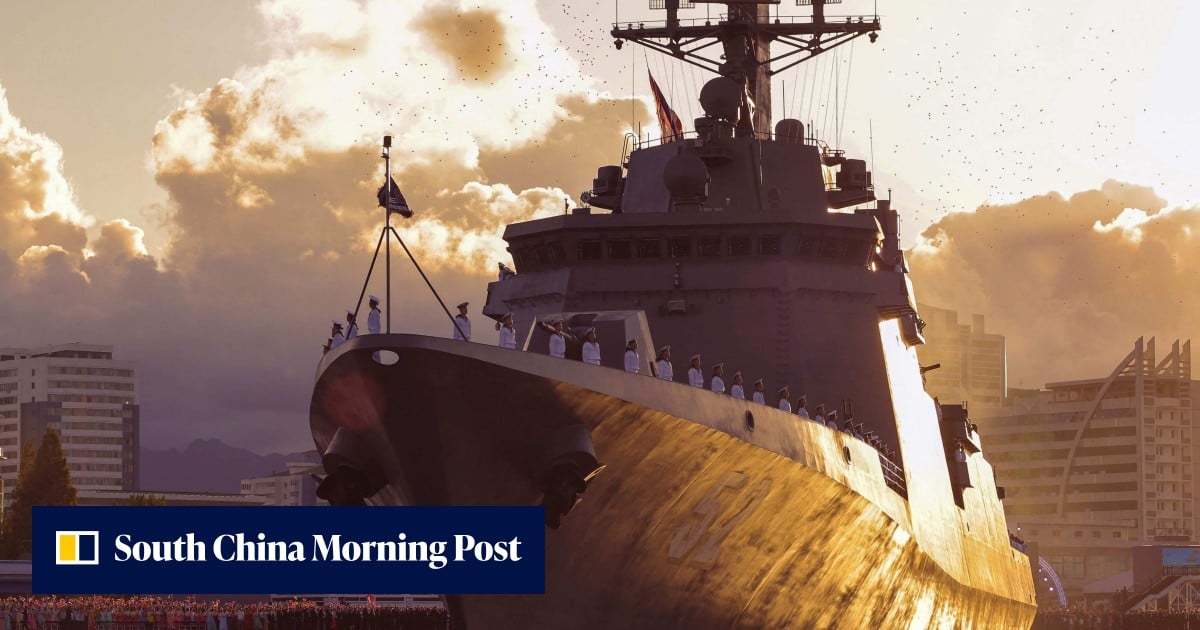
Kim Jong-un oversaw the commissioning of the 5,000-tonne destroyer, equipped with nuclear-capable missiles, in Wonsan, emphasizing the need for a more reliable nuclear deterrent. This move coincides with joint military exercises by the US, South Korea, and Japan, which Pyongyang views as a security threat, escalating regional tensions.
Imagine a kid who really wants to show off their new, powerful toy boat that can shoot special rockets. That's kind of what North Korea's leader, Kim, just did by launching a big new warship that can carry nuclear missiles. He did this while other countries like the US, South Korea, and Japan were practicing their own military games nearby, which made him want to show off even more. It's like a big game of 'who has the scarier toy' on the ocean.
Analysis
North Korea's recent commissioning of the Kang Kon, its second nuclear-capable destroyer, marks a significant escalation in its military capabilities and rhetoric. This development, coming just 15 months after the Choe Hyon, underscores Pyongyang's commitment to diversifying its nuclear deterrent and projecting power through its navy. The timing is particularly provocative, coinciding with trilateral military exercises involving the United States, South Korea, and Japan, which North Korea consistently condemns as hostile acts. Kim Jong-un's presence at the ceremony, alongside his daughter Ju-ae, signals the strategic importance Pyongyang places on these advancements.
Kang Kon
The Kang Kon is a 5,000-tonne destroyer, reportedly equipped with nuclear-capable missiles, making it one of North Korea's most advanced warships. Its commissioning, following closely on the heels of the Choe Hyon, indicates a concerted effort by Pyongyang to bolster its naval power and enhance its ability to deploy nuclear weapons from various platforms. Kim Jong-un explicitly stated that these destroyers instill fear in enemies, asserting that the nuclear armament of the navy allows for a more diversified and practical exercise of its nuclear deterrent. This move aims to strengthen North Korea's maritime defense and war deterrence capabilities, further complicating regional security dynamics.
Ju-ae
The appearance of Kim Jong-un's teenage daughter, Ju-ae, at the commissioning ceremony has once again drawn international attention, particularly from South Korea's spy service, which identifies her as his likely heir. Her prominent role, walking alongside her father on a red carpet, touring the warship, and posing with sailors, suggests a deliberate effort to present her as a future leader. This public display reinforces the dynastic nature of North Korean leadership and could be an attempt to solidify internal support for the Kim family's continued rule. Her presence at such a critical military event underscores the regime's long-term strategic planning and succession considerations.
Donald Trump
The current escalation by North Korea is framed within a broader context of its interactions with the United States, specifically referencing past diplomatic efforts under President Donald Trump. The article notes that North Korea is 'dialing up pressure on the US after rebuffing President Donald Trump’s decision to scale back a major military drill with South Korea in a conciliatory step towards Kim.' This historical context suggests that Pyongyang's current actions are partly a response to perceived past concessions or a lack thereof, and an attempt to 'wrest bigger US concessions.' The ongoing military drills by the US, South Korea, and Japan are seen by North Korea as a direct challenge, fueling its resolve to enhance its nuclear capabilities and assert its military strength in the region.
Key points
- North Korean leader Kim Jong-un commissioned the Kang Kon, a second nuclear-capable destroyer, in Wonsan.
- The 5,000-tonne destroyer is equipped with nuclear-capable missiles, enhancing North Korea's naval deterrent.
- The commissioning coincides with trilateral military drills by the US, South Korea, and Japan, which Pyongyang views as a threat.
- Kim Jong-un's daughter, Ju-ae, attended the ceremony, fueling speculation about her potential succession.
- North Korea aims to diversify its nuclear combat systems and strengthen maritime defense, seeking to deepen 'concerns of the enemies'.
The commissioning of a second nuclear-capable destroyer significantly heightens military tensions in East Asia, increasing the risk of miscalculation or accidental conflict. This development could accelerate a regional arms race, prompting neighboring countries to bolster their own defenses and further destabilizing an already volatile geopolitical landscape.