Pan Jianwei becomes first Chinese scientist to win the top UN basic science prize
Chinese quantum scientist Pan Jianwei has won the United Nations' top fundamental science prize for his work in quantum computation and communications. He is recognised for his seminal contributions to large-scale secure quantum communications and scalable quantum computa…
Intelligence analysis by Llama
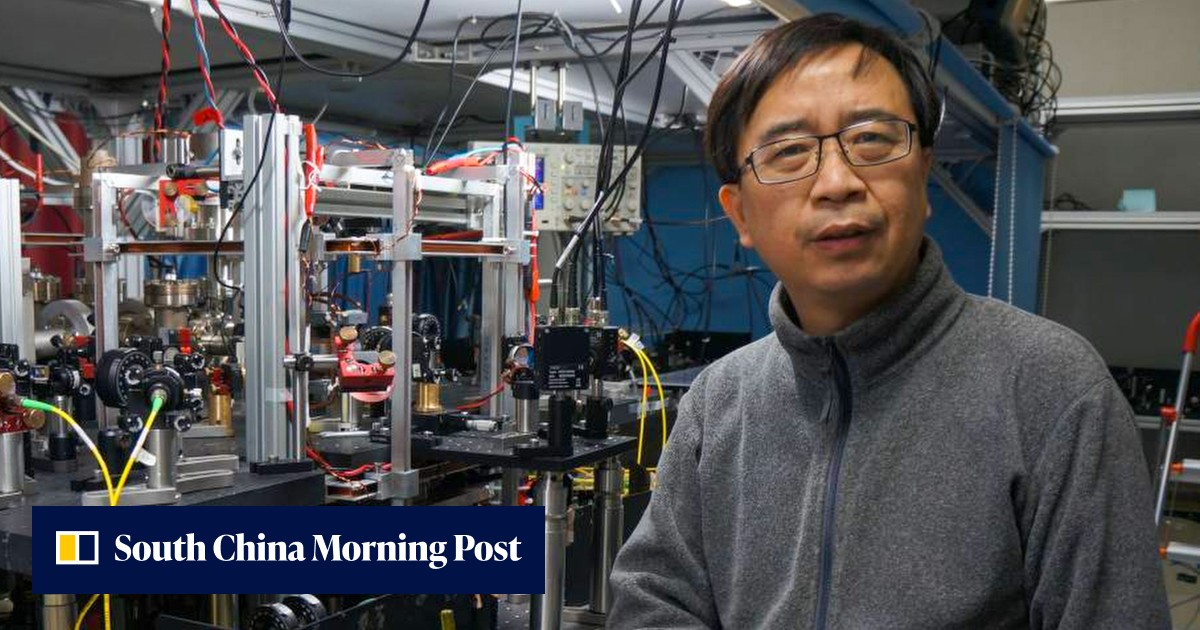
Pan Jianwei, a professor of physics at the University of Science and Technology of China, has won the Unesco-Russia Mendeleev International Prize in the Basic Sciences for his work in quantum computation and communications. He shares this year's honour with Sergei Sheiko, a chemistry professor at the University of North Carolina at Chapel Hill.
Pan Jianwei is a Chinese scientist who has won a big prize for his work in quantum computers and secure communication. He and his team have developed a way to send secret messages over long distances using quantum mechanics. This is like a super-secure way to send information that can't be hacked.
Analysis
A $60B Vote of Confidence
Pan Jianwei's win of the Unesco-Russia Mendeleev International Prize in the Basic Sciences is a significant milestone for Chinese scientists. The prize, which is funded by the Russian government, honours two scientists for discoveries and innovations in basic sciences that drive global or regional transformation. Pan's work in quantum computation and communications has been recognised for its potential to drive global transformation and improve secure information transfer.
Pan's team developed the Micius satellite, enabling quantum key distribution and quantum teleportation over thousands of kilometres. This technology has the potential to revolutionise secure information transfer and has been demonstrated to be scalable and secure. Pan's work has also brought the prospect of a global quantum network from theory to reality.
Pan shares this year's honour with Sergei Sheiko, a chemistry professor at the University of North Carolina at Chapel Hill. Sheiko is recognised for his polymer physics research which transformed the rational design of soft materials. This research has the potential to improve the design of materials and has been recognised for its impact on the field of chemistry.
Pan's win is significant as it marks the first time a Chinese scientist has won the top UN basic science prize. His work in quantum computation and communications has the potential to drive global transformation and improve secure information transfer. This win is a testament to the growing importance of China's scientific community and its contributions to the global scientific community.
Why Cursor?
Pan's work in quantum computation and communications has the potential to revolutionise secure information transfer. His team's development of the Micius satellite has enabled quantum key distribution and quantum teleportation over thousands of kilometres. This technology has the potential to improve secure information transfer and has been demonstrated to be scalable and secure.
Pan's work has also brought the prospect of a global quantum network from theory to reality. This network has the potential to improve secure information transfer and has been recognised for its potential to drive global transformation.
The Road Ahead
Pan's win is significant as it marks the first time a Chinese scientist has won the top UN basic science prize. His work in quantum computation and communications has the potential to drive global transformation and improve secure information transfer. This win is a testament to the growing importance of China's scientific community and its contributions to the global scientific community.
Pan's work has the potential to improve secure information transfer and has been recognised for its potential to drive global transformation. His team's development of the Micius satellite has enabled quantum key distribution and quantum teleportation over thousands of kilometres. This technology has the potential to revolutionise secure information transfer and has been demonstrated to be scalable and secure.
Key points
- Pan Jianwei is the first Chinese scientist to win the Unesco-Russia Mendeleev International Prize in the Basic Sciences.
- He is recognised for his seminal contributions to large-scale secure quantum communications and scalable quantum computation.
- Pan's team developed the Micius satellite, enabling quantum key distribution and quantum teleportation over thousands of kilometres.
- His work has the potential to drive global transformation and improve secure information transfer.
If Pan Jianwei's work in quantum computation and communications continues to advance, it could lead to significant improvements in secure information transfer and drive global transformation. This could have a positive impact on international relations and global cooperation.
However, the development of quantum computers and secure communication technology also raises concerns about the potential for espionage and cyber attacks. If not properly secured, these technologies could be used for malicious purposes.