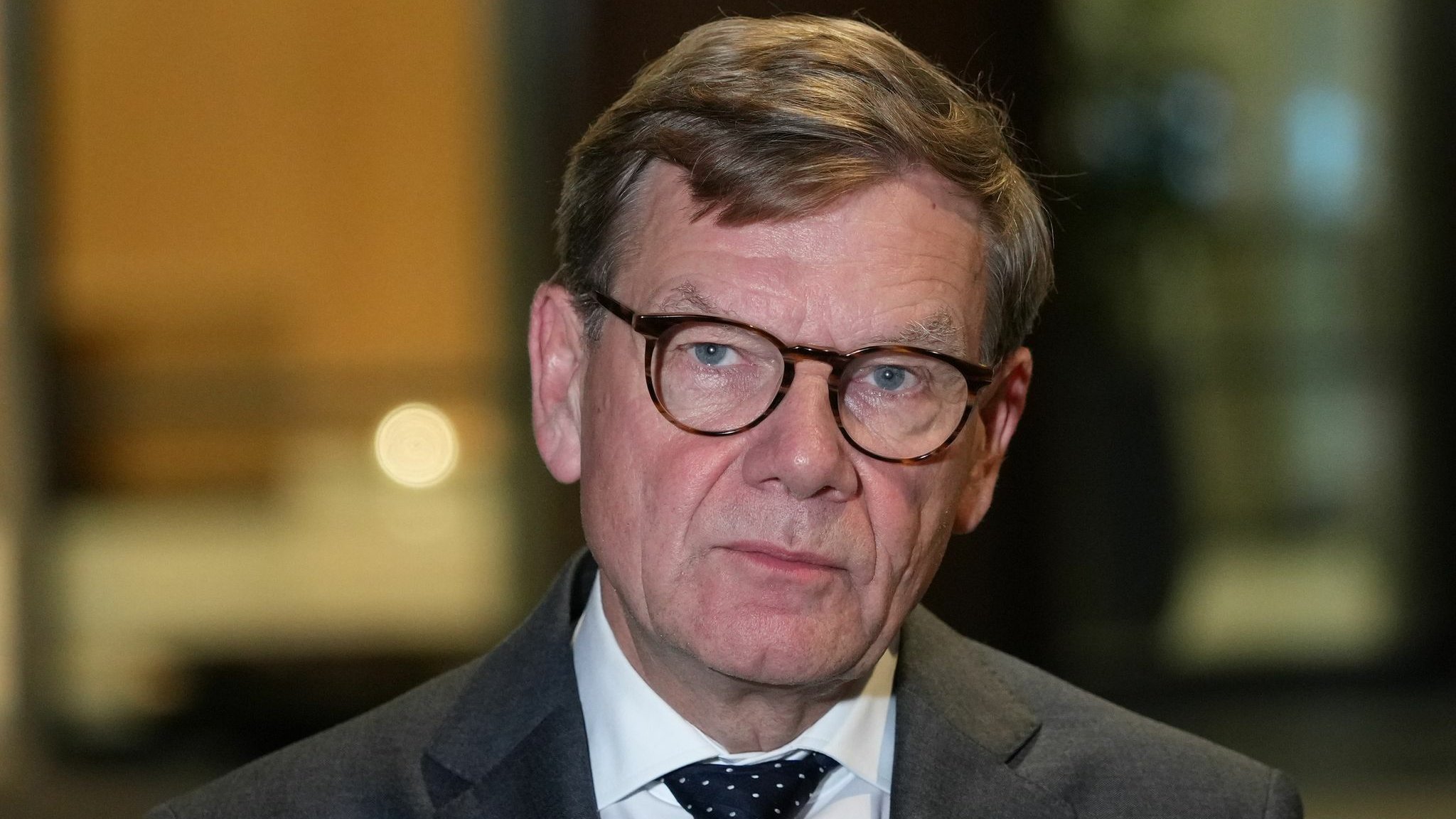
“Reckless and Dangerous Escalation” – Wadephul Attacks Russia in UN Security Council
German Foreign Minister Johann Wadephul criticized Russia's "reckless and dangerous escalation" in Europe, including a drone attack in Leipzig, during a UN Security Council session, while Russian Foreign Minister Sergei Lavrov rejected a ceasefire and justified the ongoin…
Intelligence analysis by Gemini 2.5 Flash

At a rare UN Security Council appearance, German Foreign Minister Johann Wadephul condemned Russia's actions in Ukraine and a drone attack in Leipzig, urging immediate peace talks and a ceasefire. However, Russian Foreign Minister Sergei Lavrov dismissed calls for a pause in military operations, reiterating Moscow's stance on continuing its offensive.
Imagine two kids, Ukraine and Russia, are fighting over a toy. Germany's grown-up, Mr. Wadephul, went to a big meeting with other grown-ups to say Russia is being really mean and even tried to break some other kids' planes in a place called Leipzig. He said Russia needs to stop fighting right now and talk things out. But Russia's grown-up, Mr. Lavrov, said they won't stop because they think Ukraine will just get stronger if they do. It's like one kid wants to keep fighting, and the other wants to make peace.
Analysis
During a significant session of the UN Security Council, German Foreign Minister Johann Wadephul delivered a strong condemnation of Russia's actions, particularly focusing on the ongoing war in Ukraine and specific incidents like the Leipzig drone attack. His address underscored Germany's commitment to international law and its role in advocating for peace and stability in Europe. The rare opportunity for Germany, a non-permanent member candidate, to speak at such a high-level forum during the UN's 'High-Level-Week' emphasized the gravity with which Berlin views the current geopolitical landscape.
Johann Wadephul
Johann Wadephul, representing Germany, used his platform at the UN Security Council to articulate three core demands aimed at de-escalating the conflict and paving the way for peace. These demands included an immediate and complete ceasefire, particularly in the Black Sea region to secure vital Ukrainian grain exports, a comprehensive exchange of prisoners of war, and good-faith negotiations based on international law. He explicitly stated that Ukraine has long been ready for such negotiations, but Russia's refusal demonstrates its failure to uphold its responsibilities as a permanent member of the Security Council.
Wadephul's intervention also directly addressed the Leipzig drone attack, which he characterized as part of a broader pattern of "reckless and dangerous escalation" by Russia in Europe. This direct accusation, made before a global audience, highlights Germany's concern over Russia's aggressive tactics extending beyond the immediate conflict zone in Ukraine. His speech aimed to rally international support for a diplomatic resolution while firmly denouncing Russia's continued military actions and alleged provocations.
Sergei Lavrov
In stark contrast to Wadephul's call for peace, Russian Foreign Minister Sergei Lavrov presented a lengthy and historically revisionist justification for the ongoing conflict. He accused Ukraine and European nations of "deceptions" and "criminal methods," framing Russia's actions as a necessary response. Crucially, Lavrov explicitly stated that Russia would not pause its "special military operation," effectively rejecting global calls for a ceasefire.
Lavrov's assertion that Russia is "ready to negotiate" was immediately undercut by his insistence that military operations must continue to prevent Ukraine from rearming with European assistance. This contradictory stance offers little hope for immediate diplomatic breakthroughs and reinforces the perception that Russia is not genuinely committed to a peaceful resolution on terms acceptable to Ukraine and its allies. His remarks underscore Moscow's determination to achieve its objectives through military means, despite international pressure.
Leipzig Drone Attack
The Leipzig drone attack, specifically mentioned by Johann Wadephul, served as a concrete example of what Germany perceives as Russia's escalating aggression beyond the direct battlefields of Ukraine. Wadephul accused Russia of attempting to destroy two cargo planes with an explosive drone, labeling it not an isolated incident but part of a "reckless and dangerous escalation by Russia in Europe." This incident, if confirmed, would represent a significant expansion of Russia's aggressive actions into civilian infrastructure and potentially neutral territory.
The German Foreign Minister's decision to highlight this specific event in the UN Security Council underscores its perceived importance as evidence of Russia's broader destabilizing activities. It aims to draw international attention to the potential for the conflict to spill over and affect other European nations, emphasizing the need for a unified and firm response. The accusation adds another layer to the complex narrative of Russian aggression, moving beyond the direct invasion of Ukraine to encompass alleged acts of sabotage and destabilization in other European countries.
Key points
- German Foreign Minister Johann Wadephul condemned Russia's "reckless and dangerous escalation" at the UN Security Council.
- Wadephul cited the Leipzig drone attack as an example of Russia's aggressive actions in Europe.
- He presented three core demands: an immediate ceasefire, a comprehensive prisoner exchange, and good-faith negotiations based on international law.
- Russian Foreign Minister Sergei Lavrov rejected a pause in military operations, accusing Ukraine and Europeans of "deceptions."
- The US has invited President Putin to the G20 summit to facilitate direct talks with Ukrainian President Zelenskyy.
- Ukraine's President Zelenskyy expressed conditional readiness for a ceasefire in attacks on energy infrastructure.
The US invitation to President Putin for the G20 summit in Miami, aimed at facilitating direct talks with Ukrainian President Zelenskyy, could potentially open a crucial diplomatic channel. Furthermore, Zelenskyy's conditional readiness for a ceasefire in the energy sector offers a tangible starting point for de-escalation, even if limited, and could pave the way for broader peace discussions.
Russia's explicit refusal to pause its "special military operation" and Foreign Minister Lavrov's continued justification of the war suggest a prolonged conflict with little immediate hope for a comprehensive ceasefire or meaningful peace negotiations. This stance indicates Moscow's determination to achieve its objectives militarily, potentially leading to further escalation and humanitarian crises.