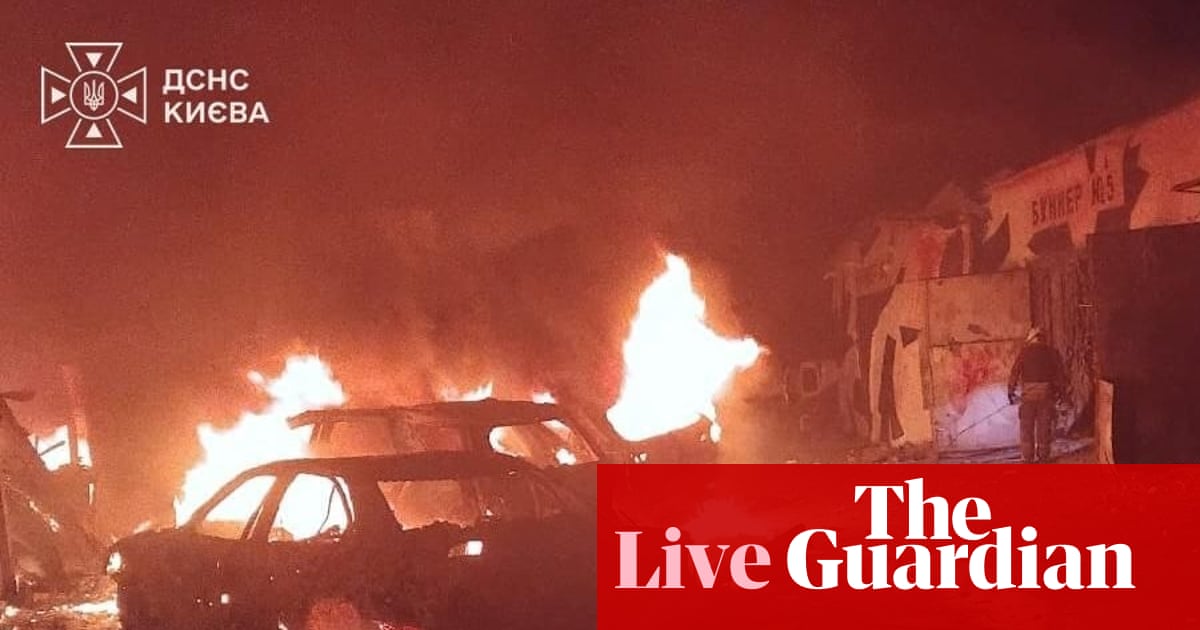
Russian drone hits Kyiv-Warsaw passenger train near Polish border
A Russian drone struck a passenger train traveling from Kyiv to Warsaw just two kilometers from the Polish border, prompting Ukraine's foreign minister to declare it 'Putin's terror knocking directly on the doors of the EU and Nato.' No casualties were reported on the tra…
Intelligence analysis by Gemini 2.5 Flash
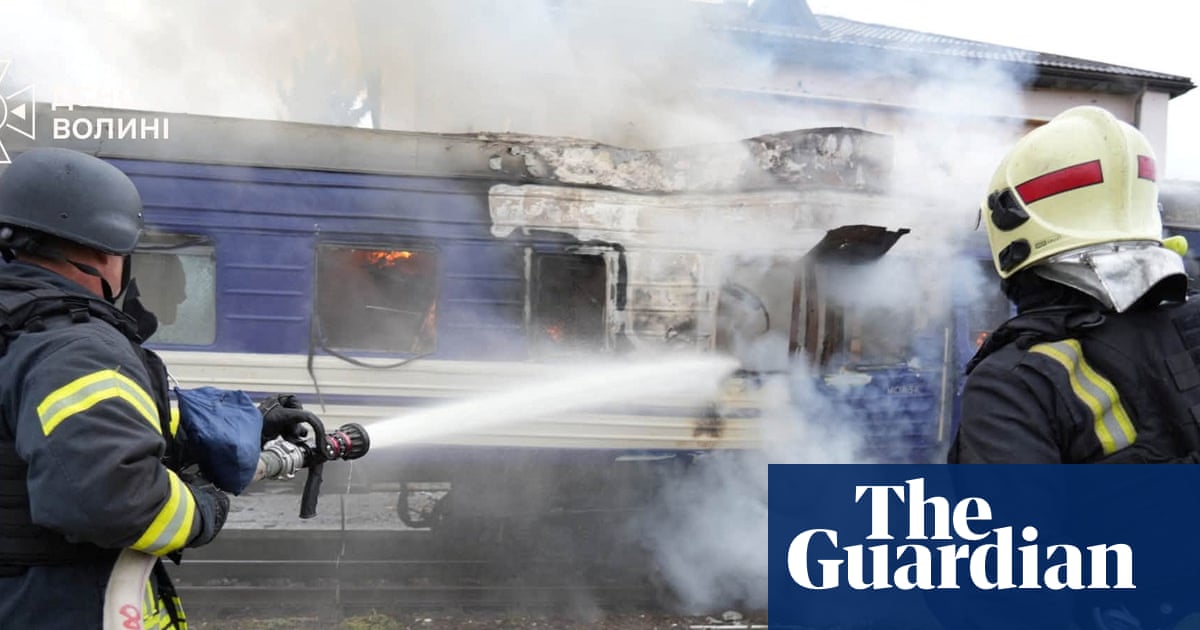
A passenger train en route to Warsaw from Kyiv was hit by a Russian drone close to the Polish border, an incident that Ukrainian officials are framing as a direct threat to European security. This attack occurred amidst a wave of over 450 Russian drone and missile strikes across Ukraine, which caused multiple fatalities and injuries, particularly in the usually quieter western regions…
Imagine a big train carrying people from one country, Ukraine, to another, Poland, gets hit by a flying robot, called a drone, very close to the border. It's like someone throwing a rock at a school bus right next to your backyard fence. Luckily, no one on the train got hurt, but it made everyone scared and showed that the fighting in Ukraine is getting very close to other countries, making their leaders worried about what might happen next.
Analysis
The recent Russian drone strike on a Kyiv-Warsaw passenger train, occurring a mere two kilometers from the Polish border, marks a notable escalation in the ongoing conflict. While no casualties were reported on the train itself, the proximity to a NATO and EU member state's territory has profound implications, transforming what might otherwise be a tragic but internal Ukrainian event into a matter of international security concern. The attack highlights Russia's willingness to target civilian transport routes, potentially disrupting vital humanitarian and diplomatic corridors between Ukraine and its Western allies. Passengers on the train, including a director of an organization providing training in high-risk environments and a British economist, recounted harrowing experiences of multiple evacuations and witnessing the destruction, underscoring the direct human impact of these escalating hostilities.
Andrii Sybiha
Ukraine's foreign minister, Andrii Sybiha, swiftly condemned the attack, framing it as 'Putin's terror knocking directly on the doors of the EU and Nato.' This strong rhetoric is a deliberate attempt to galvanize international support and emphasize the existential threat Russia poses not just to Ukraine, but to the broader European security architecture. Sybiha's statement, shared on X, serves as a stark warning to Western partners, urging them to recognize the immediate danger at their 'gate.' The Ukrainian government consistently seeks to portray the conflict as a defense of European values and security, and incidents like this drone strike near a NATO border provide potent material for such diplomatic appeals.
The foreign minister's comments are not merely rhetorical; they reflect a strategic effort to underscore the interconnectedness of Ukrainian and European security. By directly linking the attack to the 'doors of the EU and Nato,' Sybiha aims to impress upon member states the urgency of increased military and political assistance. The implication is clear: if Russia's aggression is not contained within Ukraine, its 'terror' could directly impact allied territories, necessitating a more robust and unified response from the international community. This diplomatic pressure is crucial for Ukraine as it seeks to maintain and expand the flow of Western aid.
Donald Tusk
The Polish prime minister, Donald Tusk, convened an emergency meeting following the drone strikes near the border, signaling the gravity with which Poland views these developments. Tusk's warning that intensifying Russian attacks could 'also affect our territory' underscores the palpable anxiety within NATO's eastern flank. Poland, a frontline state, has been a staunch supporter of Ukraine and is acutely aware of the risks posed by the conflict's proximity. The prime minister's remarks indicate a heightened state of alert and a recognition that the conflict's boundaries are becoming increasingly blurred, potentially leading to unintended or deliberate incursions into Polish airspace or territory.
The Polish government's response, including Tusk's public statements, serves to both reassure its populace and send a clear message to Moscow about the seriousness of any potential spillover. Tusk also revealed that Polish security services and allied intelligence agencies had anticipated attempts to 'disrupt, paralyse, and perhaps even destroy Ukrainian border crossings,' suggesting a degree of preparedness but also highlighting the persistent threat. This proactive stance by Poland, a key NATO member, reflects the alliance's collective defense posture and the commitment to protecting its borders, even as the conflict rages just beyond them. The incident reinforces the need for robust border security and intelligence sharing among allies.
Key points
- A Russian drone struck a Kyiv-Warsaw passenger train two kilometers from the Polish border, with no casualties reported on board.
- The attack was part of a larger wave of over 450 Russian drone and missile strikes across Ukraine, which killed at least six people.
- Ukraine's foreign minister, Andrii Sybiha, described the incident as 'Putin's terror knocking directly on the doors of the EU and Nato.'
- The Polish prime minister, Donald Tusk, warned that intensifying Russian attacks could affect Polish territory and chaired an emergency meeting.
- A 'diplomatic train' carrying figures like Boris Johnson and David Petraeus had passed through the same border crossing shortly before the strike.
The drone strike near the Polish border significantly heightens the risk of direct conflict escalation, potentially drawing NATO members into the war if Russian attacks inadvertently or deliberately cross into allied territory. This incident could lead to increased civilian casualties and further disruption of critical infrastructure, exacerbating humanitarian crises and destabilizing regional security.