Senegal government silences Football Federation amid World Cup row
The Senegalese government has ordered the country's Football Federation to cease all public statements and interviews following the national team's World Cup exit and escalating internal disputes. This directive comes amidst a review of responsibilities and future plans f…
Intelligence analysis by Gemini 2.5 Flash
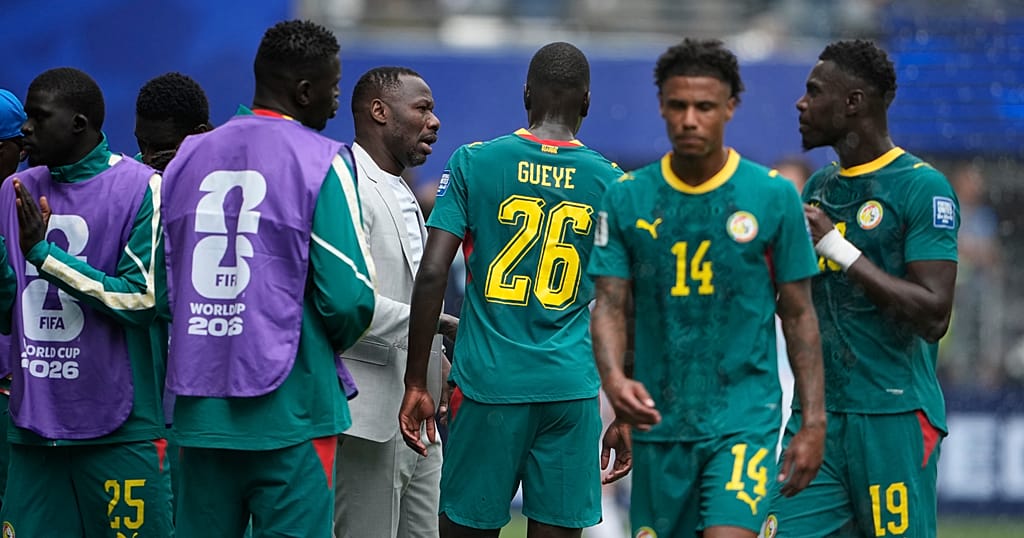
Following Senegal's elimination from the World Cup, the government has imposed a gag order on the national Football Federation, prohibiting public comments. This move aims to control the narrative and allow for an internal review after the team's early exit, the coach's dismissal, and public blame-shifting within the federation, compounded by lingering issues from a previous AFCON con…
Imagine your school's best soccer team lost a big game, and everyone started arguing about whose fault it was. The principal then told all the coaches and team leaders they couldn't talk to anyone outside the school until she figured out what went wrong and how to make things better. That's kind of what happened in Senegal with their national soccer team and the government.
Analysis
Government Intervention in Football Governance
The Senegalese government has taken an unprecedented step by imposing a strict gag order on the national Football Federation (FSF). This directive prohibits the FSF from conducting interviews, making public statements, or commenting on social media until further notice. Such a move underscores the significant influence and control that governments in many African nations exert over national sports bodies, particularly when national pride and public sentiment are heavily invested in team performance. The government's stated intention to "examine responsibilities and sketch out a plan to move forward" suggests a comprehensive review of the federation's operations and accountability.
This intervention is not merely about a single tournament but reflects a deeper concern about the management and public image of Senegalese football. The government's decision to silence the federation indicates a desire to prevent further public infighting and to manage the fallout from recent controversies. It also signals a potential restructuring or significant policy changes within the FSF, as the state seeks to reassert control and ensure future success. The implications of such a strong governmental hand could set a precedent for other national sports federations in the region, raising questions about autonomy and political interference.
Fallout from World Cup Exit and Internal Strife
Senegal's early exit from the World Cup, defeated 3-2 by Belgium in the Round of 32, triggered immediate repercussions, including the dismissal of coach Pape Thiaw. However, the situation escalated further when the FSF president publicly attributed player unease during the tournament to the team's long-time doctor, Dr. Abdourahmane Fédior. This public blame-shifting exacerbated tensions and likely contributed to the government's decision to intervene. The internal discord within the federation, made public through these statements, painted a picture of disarray at a time when national unity and accountability were expected.
Adding to the current woes, the article notes that "tensions also still remain with regards to last year's AFCON," where Senegal was controversially stripped of its title against Morocco after players briefly walked off the field. This historical context suggests a pattern of mismanagement or contentious incidents within Senegalese football, making the current World Cup fallout a cumulative crisis rather than an isolated event. The government's silence order is thus an attempt to halt the public airing of grievances and allow for a more controlled, internal assessment of these recurring issues.
The Path Forward for Senegalese Football
With the government now stepping in to "examine responsibilities and sketch out a plan to move forward," the future of Senegalese football governance hangs in the balance. This period of enforced silence is likely intended to facilitate a thorough investigation into the causes of the team's performance issues and the internal conflicts within the FSF. The outcome could range from a complete overhaul of the federation's leadership and structure to the implementation of new policies aimed at improving player welfare, coaching strategies, and overall administrative efficiency. The government's involvement signals a commitment to restoring the reputation and performance of the national team, which holds immense cultural and social significance in Senegal.
The challenge for the government will be to implement changes that address the root causes of the problems without stifling the independence and expertise necessary for effective sports management. Balancing state oversight with the operational autonomy of the FSF will be crucial for long-term success. The "plan to move forward" will need to be comprehensive, addressing both immediate concerns related to the World Cup and the lingering issues from past tournaments, to ensure that Senegalese football can regain its competitive edge and public trust.
Key points
- Senegal's government ordered its Football Federation to stop all public statements.
- The directive follows Senegal's World Cup exit and internal disputes.
- The national team, the Teranga Lions, lost 3-2 to Belgium in the Round of 32.
- Coach Pape Thiaw was dismissed, and the federation president blamed the team doctor for player unease.
- Lingering tensions from a controversial AFCON title stripping also contribute to the crisis.
- The government plans to examine responsibilities and develop a future plan for football.
The government's intervention could lead to a thorough review of the Football Federation's operations, potentially resulting in improved governance, better player support, and more effective coaching strategies. This could ultimately strengthen Senegalese football, ensuring greater success in future international tournaments and restoring public confidence.
The government's gag order risks stifling transparency and could be seen as political interference, potentially leading to further internal resentment and a lack of accountability within the Football Federation. This could hinder genuine reform efforts and negatively impact the morale and performance of the national team in the long run.