Trump says US to strike Iran's Pickaxe Mountain nuclear site
US President Donald Trump has pledged further strikes on Iran, targeting an underground nuclear facility known as Pickaxe Mountain. Trump said the US government has 'a lot of eyes' on the site and that there is 'no activity' there, but satellite imagery has detected recen…
Intelligence analysis by Llama
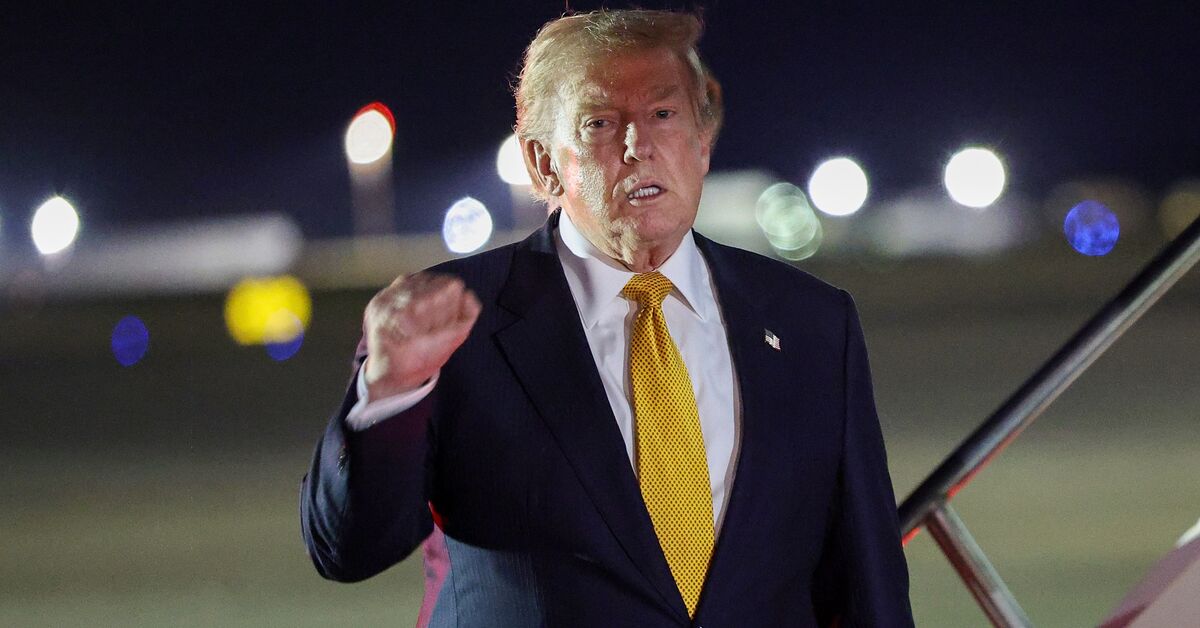
US President Donald Trump has threatened to strike Iran's Pickaxe Mountain nuclear site, which is believed to be used for covert purposes such as uranium enrichment. Trump's comments come as the US and Iran are set to discuss inspector access during the 60-day period for nuclear talks.
Imagine you're playing a game of hide-and-seek with your friends. You and your friends are all hiding in different places, and you need to find each other. But what if one of your friends had a secret hideout that they didn't want anyone else to know about? That's kind of like what's happening with Iran and its nuclear program. Iran has a secret hideout called Pickaxe Mountain where it's building a nuclear facility. The US is trying to find out what's going on there and might even try to destroy it. But Iran doesn't want anyone to know about its secret hideout, so it's not letting anyone in to check it out.
Analysis
A Possible Target for a Big, Fat Shot
US President Donald Trump has threatened to strike Iran's Pickaxe Mountain nuclear site, which is believed to be used for covert purposes such as uranium enrichment. Trump's comments come as the US and Iran are set to discuss inspector access during the 60-day period for nuclear talks.
The Pickaxe Mountain facility is located in the Zagros Mountains about one mile away from Natanz, one of the three Iranian nuclear sites that the US military bombed in June 2025. Since then, Iran has only allowed the International Atomic Energy Agency to visit sites that don't pose a proliferation risk, such as the Tehran Research Reactor and Iran's commercial nuclear facility in Bushehr.
Negotiators for the United States and Iran were expected to discuss inspector access during the 60-day period for nuclear talks set out by their preliminary agreement. In Monday's interview, Trump downplayed the deal, calling it a 'test' that 'didn't mean much.'
"We're going to hit them very hard tonight, and we're going to hit them hard tomorrow," he said. Shortly after Trump's remarks, US Central Command announced it had begun a third consecutive night of strikes against Iran 'at the commander in chief's direction,' saying the operations would 'continue imposing a heavy cost on Iranian forces and degrade their ability to attack innocent civilians and commercial shipping in the Strait of Hormuz.'
The potential strike on Pickaxe Mountain has significant implications for the Middle East, as it could escalate tensions between the US and Iran and potentially disrupt the region's fragile balance of power. The US and Iran have been engaged in a series of tit-for-tat strikes, with the US targeting Iranian military sites and Iran retaliating with missile attacks on US bases in Iraq.
The situation is further complicated by the fact that the US and Iran are not just adversaries, but also have a complex web of alliances and rivalries in the region. The US has long been a key ally of Israel, which has been a vocal critic of Iran's nuclear program, while Iran has been a key ally of Syria and Lebanon, which have been embroiled in the Syrian civil war.
In this context, the potential strike on Pickaxe Mountain is not just a military operation, but also a diplomatic and strategic move that could have far-reaching consequences for the region and the world.
Key points
- US President Donald Trump has threatened to strike Iran's Pickaxe Mountain nuclear site
- The site is believed to be used for covert purposes such as uranium enrichment
- The US and Iran are set to discuss inspector access during the 60-day period for nuclear talks
- The potential strike on Pickaxe Mountain has significant implications for the Middle East
- The US and Iran have been engaged in a series of tit-for-tat strikes
If the US and Iran can come to an agreement on inspector access, it could lead to a reduction in tensions between the two countries and potentially even a nuclear deal. This could have a positive impact on the region and the world, as it would reduce the risk of nuclear conflict and promote stability.
If the US and Iran are unable to come to an agreement on inspector access, it could lead to further escalation of tensions between the two countries. This could result in a nuclear conflict, which would have devastating consequences for the region and the world.