UN's Turk calls Nobel award 'collective win' for human rights and justice
UN human rights chief Volker Turk stated that Navi Pillay's Nobel Prize is a collective win for human rights and justice, emphasizing the crucial role of international accountability mechanisms.
Intelligence analysis by Gemini 2.5 Flash
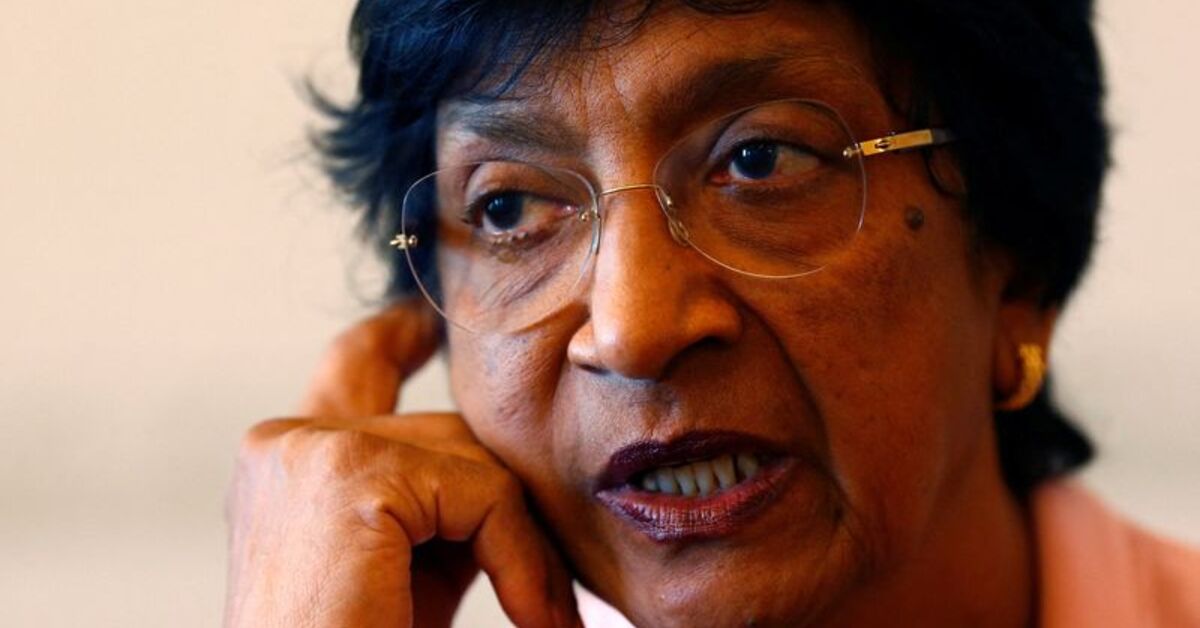
Volker Turk, the UN human rights chief, has hailed Navi Pillay's Nobel Prize as a significant victory for human rights globally, underscoring the vital importance of international criminal accountability bodies like the International Criminal Court. He highlighted Pillay's extensive work across various conflicts, acknowledging her recent controversial findings regarding Israel's actio…
Imagine a very important award was given to a special judge named Navi, who always tries to make sure people are treated fairly and held responsible for their actions, especially in big world problems. Another important leader, Volker, said this award is like a big cheer for everyone who believes in fairness and justice around the world, showing how important it is to have rules and courts that apply to everyone.
Analysis
Navi Pillay
Navi Pillay, a distinguished figure in international law and human rights, served as the UN High Commissioner for Human Rights from 2008 to 2014. Her career has been marked by a steadfast commitment to justice, including her prior role as an International Criminal Court judge. More recently, Pillay chaired a UN Commission of Inquiry on the Occupied Palestinian Territory, which concluded that Israel had committed genocide in Gaza. This finding, vehemently rejected by Israel as "scandalous," highlights the contentious nature of her work and the highly charged geopolitical landscape in which she operates.
International Criminal Court
Volker Turk's statement underscores the critical importance of international criminal accountability mechanisms, particularly the International Criminal Court (ICC). By framing Pillay's Nobel Prize as a "collective win" for human rights and justice, Turk signals a strong endorsement of these institutions. His remarks suggest that the international community views the ICC and similar bodies as indispensable tools for upholding global legal standards and ensuring perpetrators of grave crimes are held responsible. This perspective reinforces the idea that justice transcends national borders and requires robust international frameworks.
Occupied Palestinian Territory
Pillay's recent work on the Occupied Palestinian Territory brought significant international attention and controversy. Her commission's finding of genocide in Gaza, while dismissed by Israel, placed her at the center of a highly sensitive and politically charged conflict. Turk's clarification that the Nobel award recognizes her broader contributions across "so many other conflicts and situations around the world" aims to contextualize her achievements beyond this specific, contentious report. This broader recognition suggests an appreciation for her consistent advocacy and legal expertise in diverse human rights crises globally, even as her specific findings on Palestine remain a point of contention.
Key points
- UN human rights chief Volker Turk called Navi Pillay's Nobel Prize a "collective win" for human rights and justice.
- Turk emphasized the critical need for international criminal accountability mechanisms, including the International Criminal Court.
- Pillay previously chaired a UN Commission of Inquiry that found Israel committed genocide in Gaza, a claim Israel dismissed.
- Turk clarified the award recognizes Pillay's work across numerous global conflicts, not solely her role concerning Palestine.
The recognition of Navi Pillay's work through a Nobel Prize, as framed by Volker Turk, could invigorate international efforts to uphold human rights and strengthen the mandate of global accountability mechanisms. This could lead to greater international cooperation in addressing human rights abuses and ensuring justice for victims worldwide.
The controversy surrounding Pillay's past findings, particularly regarding Israel and Gaza, could lead to further politicization of human rights awards and international justice efforts. This might undermine the perceived impartiality and effectiveness of international bodies, potentially hindering their ability to achieve consensus and enforce accountability.