US-Iran strikes: latest developments
The United States struck Iran and Tehran hit back at US allies in the Gulf, as the foes battled over the vital Strait of Hormuz in the renewed Middle East war.
Intelligence analysis by Llama
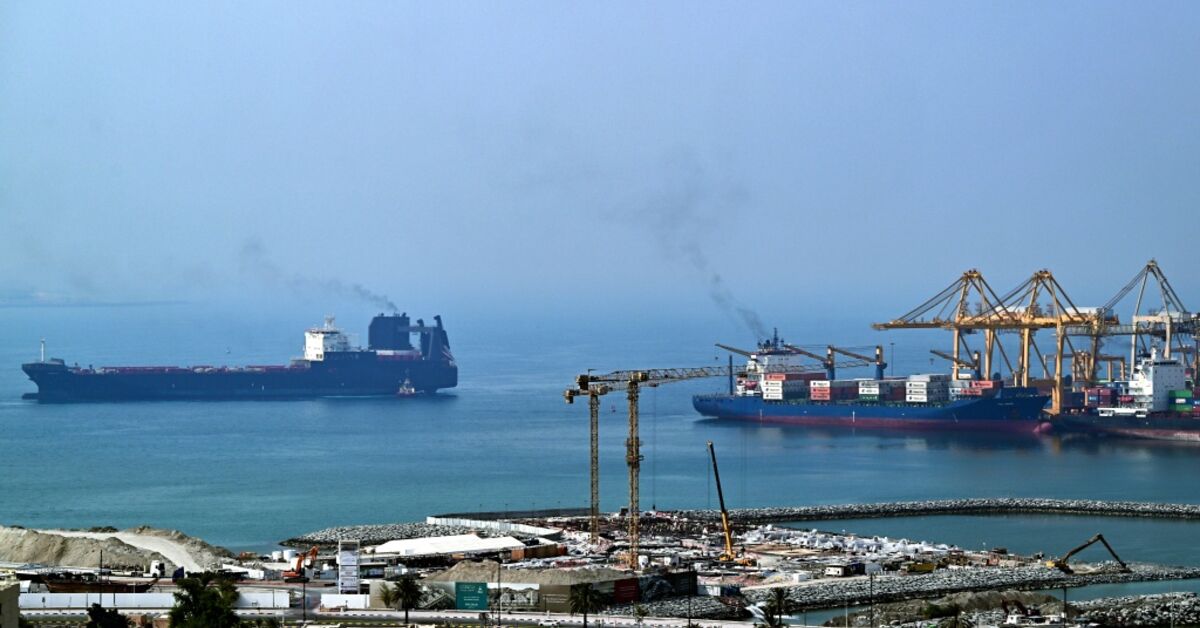
The US and Iran have exchanged blows in a rekindled Middle East war, with the US targeting Iranian military sites and Iran hitting back at US bases in the Gulf. The conflict has raised concerns about the safety of commercial shipping and civilian crews.
Imagine a big highway in the ocean that lots of ships use to travel between Europe, Asia, and the Middle East. The US and Iran are fighting over who gets to control this highway, and it's causing a big problem for ships and people who live in the area. The US wants to keep its military presence in the region, but Iran wants the US to leave. This conflict could lead to a big war that affects many countries and people.
Analysis
A Renewed Middle East War: Understanding the US-Iran Conflict
The recent escalation of violence between the US and Iran has brought the Middle East to the brink of a full-blown war. The conflict, which has been brewing for months, has seen the US launch a series of airstrikes against Iranian military sites, while Iran has retaliated by targeting US bases in the Gulf. The renewed hostilities have raised concerns about the safety of commercial shipping and civilian crews, as well as the potential for a wider conflict that could draw in other regional players.
The Strait of Hormuz: A Critical Waterway
The Strait of Hormuz, which connects the Persian Gulf to the Gulf of Oman, is a critical waterway for global energy supplies. The strait is used by oil tankers and other commercial vessels to transport goods between Europe, Asia, and the Middle East. The US and Iran have been locked in a dispute over the strait, with the US seeking to maintain its military presence in the region and Iran pushing for the US to withdraw its forces.
The Implications of a US-Iran Conflict
A full-blown war between the US and Iran would have significant implications for regional stability and global energy markets. The conflict could lead to a spike in oil prices, as well as a disruption to global supply chains. It could also draw in other regional players, including Saudi Arabia, the UAE, and Turkey, which could exacerbate the conflict and lead to a wider war.
The Road Ahead
As the conflict between the US and Iran continues to escalate, it is essential to understand the underlying causes of the conflict and the potential implications for regional stability and global energy markets. The US and Iran must work towards a peaceful resolution to the conflict, which could involve negotiations and a compromise on the strait's status.
Key points
- The US and Iran have exchanged blows in a rekindled Middle East war.
- The conflict has raised concerns about the safety of commercial shipping and civilian crews.
- The US and Iran are fighting over control of the Strait of Hormuz, a critical waterway for global energy supplies.
- A full-blown war between the US and Iran could lead to a significant increase in oil prices and a disruption to global supply chains.
- The conflict could also lead to a wider war that draws in other regional players.
If the US and Iran can find a peaceful resolution to their conflict, it could lead to a decrease in tensions in the region and a more stable global energy market. This could also lead to increased cooperation between the US and Iran on issues such as counter-terrorism and non-proliferation.
A full-blown war between the US and Iran could lead to a significant increase in oil prices, a disruption to global supply chains, and a wider conflict that draws in other regional players. This could also lead to a humanitarian crisis, with many innocent civilians caught in the crossfire.