What will happen when a SpaceX rocket collides with the Moon?
A SpaceX Falcon 9 rocket's upper stage, abandoned in orbit, is set to collide with the Moon on August 5th. Scientists anticipate it will create a significant crater and a large dust plume, offering a unique opportunity for scientific study.
Intelligence analysis by Gemini 2.5 Flash Lite
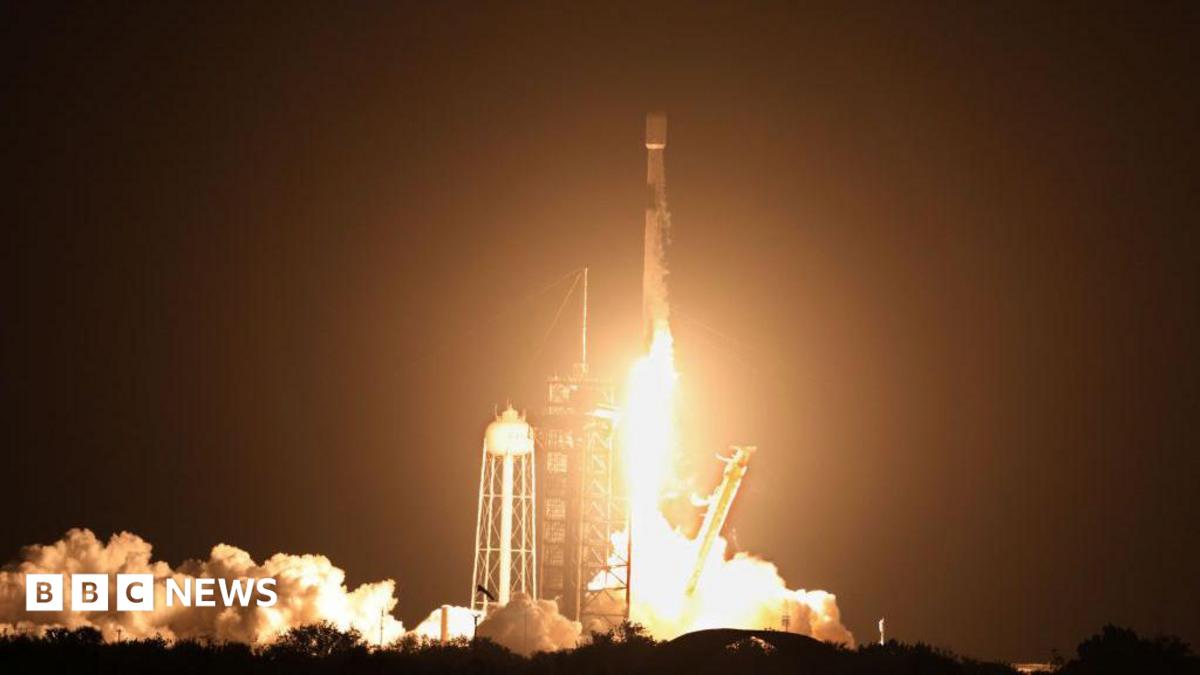
An inert upper stage of a SpaceX Falcon 9 rocket, adrift since a 2022 mission, is on a collision course with the Moon. Scheduled to impact on August 5th, the event is expected to generate a substantial crater and eject a large plume of lunar dust, providing scientists with a rare chance to study lunar impact dynamics and subsurface composition.
Imagine throwing a big, empty soda can really hard at a sandbox. When it hits, it'll make a big mess, kicking up lots of sand. This rocket is like that can hitting the Moon, making a big dust cloud and a new hole, which helps scientists learn about what's under the Moon's surface.
Analysis
An Unplanned Lunar Experiment
The impending collision of a SpaceX Falcon 9 rocket's upper stage with the Moon, predicted for August 5th, represents an unusual, albeit unintentional, scientific opportunity. This piece of space junk, weighing at least 4,000kg and roughly the size of a five-story building, has been drifting in orbit since its launch as part of a mission last year. Its trajectory was independently identified by astronomers who noted its accidental collision course with the lunar surface.
The impact is expected to occur near the Einstein Crater, on the Moon's sunlit side, and is predicted to create a crater over 17 meters in diameter. Scientists anticipate a significant ejection of lunar dust, potentially reaching altitudes of 50 kilometers, due to the Moon's lack of atmosphere and weaker gravity, making the event more dramatic than a similar explosion on Earth. This uncontrolled experiment will allow for the observation of how much material is ejected, its trajectory, and how it settles, which can refine models of lunar impacts.
Observing the Impact
While the collision itself will not be visible to the naked eye from Earth, sophisticated telescopes might detect a flash. However, the primary scientific observation will focus on the dust plume. Instruments such as the Lunar Reconnaissance Orbiter, South Korea's Danuri probe, and powerful telescopes across the Americas will be trained on the impact site. A citizen-science project is also enlisting amateur astronomers to film the event, contributing to a broader observational effort. The data gathered from the dust plume's behavior and the newly exposed subsurface material could offer insights into the Moon's composition beneath its surface.
A Cautionary Tale of Space Debris
Beyond the scientific gains, this event serves as a potent symbol of the escalating issue of human-generated space debris. The upper stage of the Falcon 9 rocket is just one of millions of objects in orbit, many of which are defunct satellites and rocket parts. The European Space Agency estimates there are around 54,000 objects larger than 10cm in space. This collision underscores the potential for such debris to pose risks, even if indirectly, and highlights the need for better management and mitigation strategies for objects in orbit, especially as space activities continue to increase.
Key points
- An upper stage of a SpaceX Falcon 9 rocket will collide with the Moon on August 5th.
- The impact is expected to create a crater over 17 meters wide and eject a large dust plume.
- Scientists will use telescopes and lunar probes to study the impact and its effects.
- The event offers a rare chance to study lunar impact mechanics and subsurface composition.
- The collision also serves as a reminder of the increasing problem of space debris.
The collision provides a unique, albeit accidental, opportunity for scientists to gather valuable data on lunar impact dynamics and the composition of the Moon's subsurface. Observing the resulting dust plume and crater can refine scientific models and potentially reveal new information about the Moon's geology.
This event highlights the growing problem of space debris, with an increasing number of defunct objects in orbit posing potential risks. The uncontrolled nature of this impact serves as a cautionary tale about the long-term consequences of space exploration and the need for better debris management.