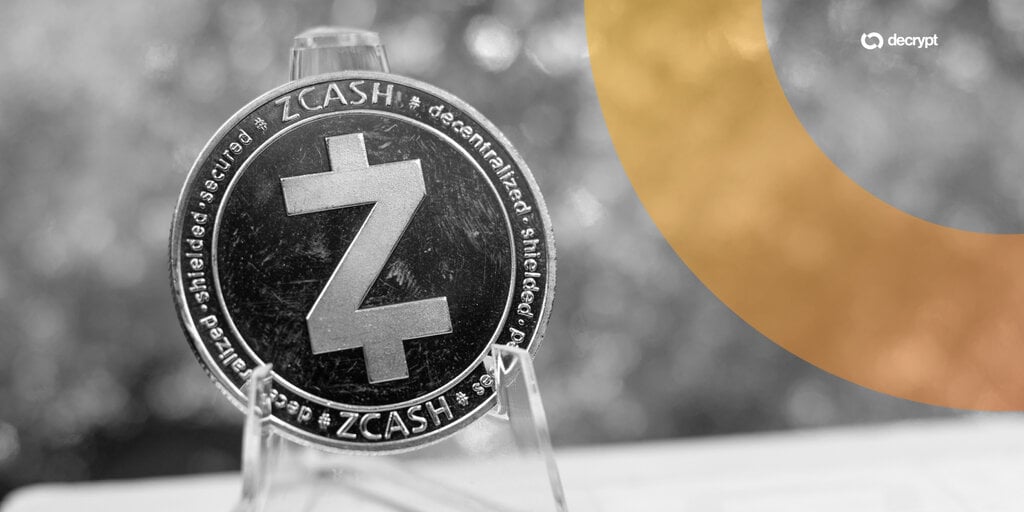
Zcash developers plan a fix to keep ZEC swaps private from future quantum computers
Zcash developers are implementing a fix through Zakura to protect ZEC swaps from future quantum computers by assigning a unique viewing key to each transaction, preventing the linking of a user's entire payment history from a single exposed refund address.
Intelligence analysis by Gemini 2.5 Flash
The team behind Zakura, a new version of Zcash software, is addressing a potential privacy vulnerability in NEAR Intents, a cross-chain swapping service. A future quantum computer could exploit publicly posted refund addresses to link a user's private ZEC transactions to their wallet. The proposed solution involves giving each ZEC swap its own private viewing key and using private inf…
Imagine you have a secret diary, and you use a special secret code to read all your entries. If you use the same code for every entry, and someone finds just one of your secret notes and cracks its code, they could then read your whole diary! Zcash is like a super-secret way to send digital money. Right now, if you swap some Zcash, a tiny clue (a refund address) is left out in the open. Future super-smart computers could use that clue to crack your main secret code and see all your Zcash secrets. So, Zcash developers are making sure that for every single swap, you get a brand new, unique secret code. That way, even if one tiny clue is found, only that one swap's secret is revealed, keeping all your other Zcash secrets safe.
Analysis
The privacy-focused cryptocurrency Zcash is taking significant steps to future-proof its transactions against the theoretical threat posed by quantum computers. While Zcash is designed to offer private payments, a specific vulnerability has been identified within cross-chain swapping services like NEAR Intents. This vulnerability could, in a quantum computing future, allow an attacker to link a user's entire transaction history from a single, publicly posted refund address.
NEAR Intents
NEAR Intents functions as a crucial bridge for users looking to swap tokens across various blockchains, including ZEC. When a user initiates a swap involving private ZEC, the service temporarily posts one of their private Zcash addresses on NEAR’s public chain. This is done to facilitate potential refunds of unused ZEC, ensuring that if a swap fails or is incomplete, the funds can be returned to the correct origin.
The core issue arises because this refund address remains on the public chain even after a successful swap, creating a persistent data point. While this poses no threat to privacy with current computational technology, it represents a potential weak link that could be exploited by sufficiently powerful quantum computers, undermining the fundamental privacy promise of Zcash.
Shor's algorithm
The theoretical threat to Zcash's privacy, and indeed to much of modern cryptography, stems from the potential application of Shor's algorithm. Published in 1994, this algorithm demonstrates how a quantum computer could efficiently factor large numbers, a task that is computationally infeasible for classical computers. In the context of cryptocurrencies, Shor's algorithm could be used to reverse-engineer public keys from addresses, thereby exposing the underlying viewing keys.
For Zcash, an attacker who cracks a viewing key from a single published address could then link all payments associated with that key, revealing transaction amounts and private memos. This is a concern not just for Zcash but also for older cryptocurrencies like Bitcoin, where public keys are already on-chain. Recent advancements, such as Google's Willow quantum chip producing near-perfect components for such attacks, underscore the urgency of developing quantum-resistant solutions, even if fully capable machines are still years away.
Zakura
Zakura, a newer iteration of the Zcash network's software, is spearheading the proposed fix to mitigate this quantum threat. The primary innovation is to assign a unique viewing key to every ZEC swap conducted through NEAR Intents. This means that even if a future quantum computer were to crack a refund address and its associated viewing key, it would only expose the details of that single swap, leaving the user's broader payment history secure.
Furthermore, Zakura addresses the practical challenge of managing hundreds of unique keys for a user who has made numerous swaps. It proposes a private information retrieval technique, allowing wallets to query a database for refund information without revealing which specific addresses they are checking. This ensures both privacy and usability, with compatible software wallets like Vizor expected to integrate this open-source feature within weeks, aligning with Zcash developers' January target for quantum-resistant payments.
Key points
- Zcash developers are planning a fix to protect ZEC swaps from future quantum computers.
- The vulnerability lies in NEAR Intents, where public refund addresses could expose a user's entire payment history if a quantum computer cracks the shared viewing key.
- Zakura's solution involves assigning a unique viewing key to each ZEC swap, limiting potential exposure to individual transactions.
- A private information retrieval technique will allow wallets to securely locate refunds without revealing which addresses they are checking.
- The fix is expected to be adopted by compatible software wallets within weeks, ahead of a January target for quantum-resistant payments.
If Zakura's proposed fix is successfully implemented and widely adopted, Zcash could solidify its position as a leading privacy coin, offering robust protection against future quantum computing threats. This proactive measure would ensure the long-term privacy and security of user transactions, potentially setting a new standard for quantum resistance within the broader cryptocurrency ecosystem.
Despite the developers' efforts, the timeline for quantum computer development remains uncertain, and unforeseen vulnerabilities could emerge in the proposed fix. Slow adoption by wallets or users, or potential complexities in integrating the new key management system, could leave some Zcash transactions exposed to future quantum attacks.