Asia-Pacific media outlets forge new partnerships ahead of Shenzhen Apec summit
Media outlets from across the Asia-Pacific region have formed new partnerships in Shenzhen, China, ahead of the 2026 Apec summit, aiming to deepen collaboration on content, talent, and technology.
Intelligence analysis by Gemini 2.5 Flash
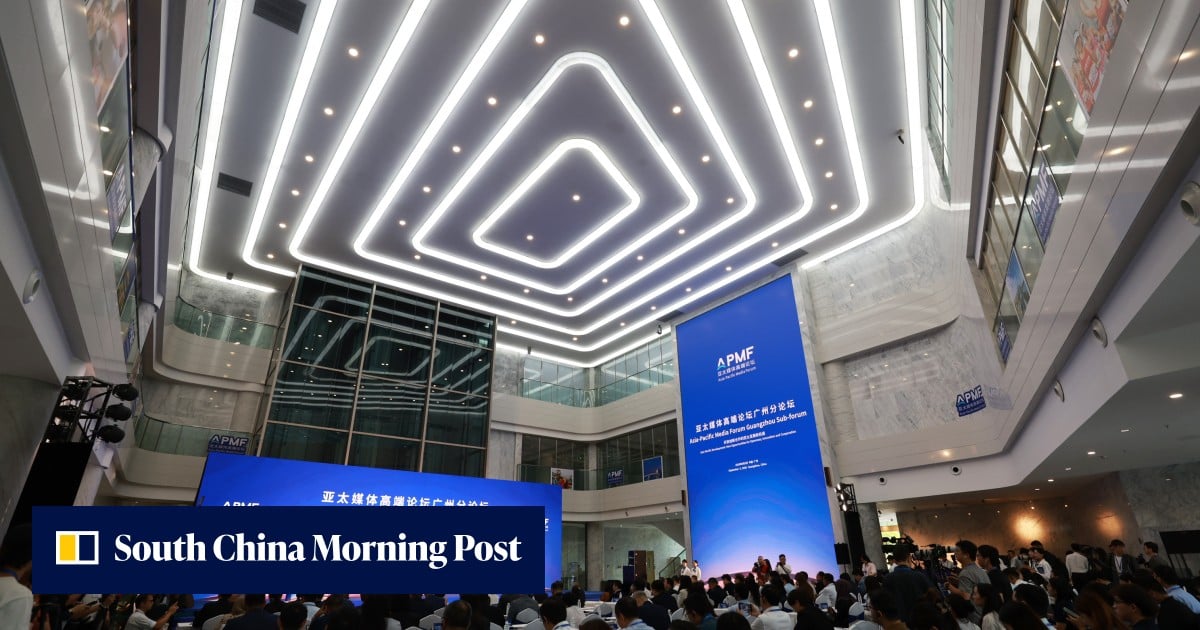
Hundreds of media representatives gathered in Shenzhen for the Asia-Pacific Media Forum, launching several collaborations and establishing the Asia-Pacific Media Partnership Organising Committee. This initiative, part of the 2026 Apec “China Year” events, seeks to enhance regional media influence and cooperation, with support from Chinese officials and state-backed media.
Imagine all the news channels and newspapers from countries around Asia getting together like friends at a big party in a city called Shenzhen. They're talking about how they can work together better, share stories, and even use cool new computer tricks like AI to make their news even more interesting. It's all happening before a big meeting where leaders from these countries will talk about how to make everyone richer and happier.
Analysis
Asia-Pacific Media Forum
The Asia-Pacific Media Forum served as the central event for these new collaborations, convening hundreds of media representatives in Shenzhen. The forum, which opened on a Saturday, followed two days of preliminary sub-forums held in other cities within Guangdong province, signaling a comprehensive regional engagement strategy. Its overarching theme, "building a path to shared prosperity for the Asia-Pacific community: media consensus and action," underscores a collective ambition to foster unity and coordinated efforts within the region's media landscape.
During the forum, a significant outcome was the establishment of the Asia-Pacific Media Partnership Organising Committee. This new body is composed of 16 founding organizations, notably including prominent state-backed media entities such as China’s People’s Daily and Xinhua News Agency, Russia’s Tass news agency, and Vietnam News Agency. The inclusion of such influential state media suggests a strategic alignment aimed at amplifying specific regional voices and perspectives.
Li Shulei
Li Shulei, who serves as the head of the publicity department of the Communist Party’s Central Committee, delivered a key address at the forum, emphasizing the strategic importance of these new partnerships. He stated that the collaboration "provides support for in-depth exchanges and enhanced cooperation," highlighting the Chinese leadership's view of media as a crucial tool for regional integration and influence. His remarks underscore the political backing for this initiative.
Furthermore, Li Shulei articulated that the partnership would "enhance the voice and influence of Asia-Pacific media." This statement suggests a goal beyond mere content sharing, pointing towards a coordinated effort to shape regional and potentially global narratives. The official announcement detailed that the partnership committee would promote a program focused on high-level dialogue, coordinated communication, technological innovation, and practical cooperation, indicating a multi-faceted approach to achieving these objectives.
Guangdong
Guangdong province played a pivotal role in hosting these events, leveraging its robust economic and technological infrastructure. Huang Kunming, the Communist Party chief of Guangdong province, highlighted the province's capacity to support media organizations in adopting advanced technologies, particularly artificial intelligence. He suggested that Guangdong's strong base could facilitate greater use of AI through technology and software collaborations, positioning the province as a hub for media innovation.
Beyond the broader regional partnerships, a specific bilateral agreement was forged within Guangdong. The South China Morning Post signed a memorandum of understanding (MOU) with Nanfang Media Group, which is based in Guangzhou, the provincial capital. This particular MOU signifies a deepening of cooperation between a Hong Kong-based English-language newspaper and a mainland Chinese media conglomerate, illustrating the diverse forms of collaboration emerging from the forum and the province's central role in facilitating such agreements.
Key points
- Asia-Pacific media outlets are forging new partnerships in Shenzhen ahead of the 2026 Apec summit.
- The Asia-Pacific Media Forum launched several collaborations and established a new Organising Committee with 16 founding organizations, including state-backed media.
- Li Shulei, head of the CCP's publicity department, stated the partnership aims to enhance the voice and influence of Asia-Pacific media.
- Guangdong province's technological and economic base is highlighted as a support for media organizations to utilize AI.
- The South China Morning Post signed an MOU with Guangzhou-based Nanfang Media Group during the event.
The new partnerships could foster greater understanding and cultural exchange across the Asia-Pacific region through enhanced content sharing and collaborative reporting. Increased technological cooperation, particularly in AI, could also lead to more innovative and efficient media production, benefiting audiences with diverse and high-quality information.
The emphasis on "media consensus and action" and the involvement of state-backed media, including those from China and Russia, could potentially lead to a more controlled narrative environment. This might limit independent journalistic voices and reduce the diversity of perspectives available to audiences in the region.