Hong Kong mega bridge’s popularity takes toll on helicopter, ferry services: lawmaker
The Hong Kong-Zhuhai-Macau Bridge (HZMB) saw record vehicle flow last year, with a lawmaker attributing its popularity to the suspension of Sky Shuttle helicopter services and a drop in ferry usage.
Intelligence analysis by Gemini 2.5 Flash
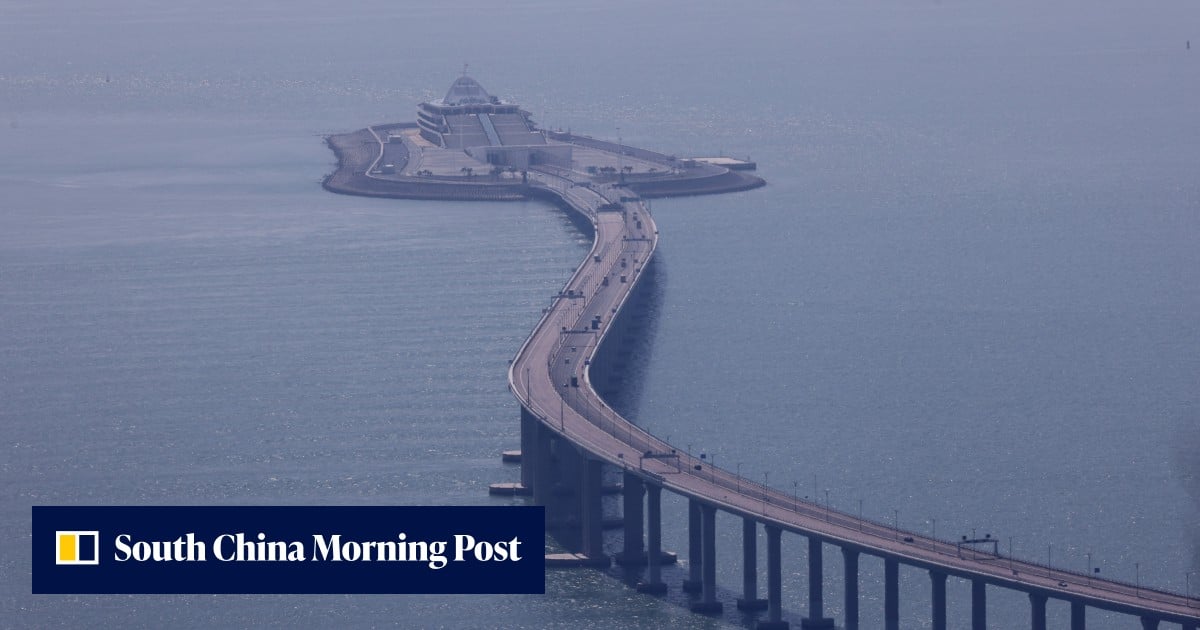
The Hong Kong-Zhuhai-Macau Bridge has experienced a significant surge in vehicle traffic, reaching a five-year high in 2025, which a legislator suggests is directly impacting the viability of traditional cross-border transport options like helicopter flights and ferry services, leading to service reductions and suspensions.
Imagine a super-long, super-cool bridge that lets cars drive really fast between Hong Kong, Zhuhai, and Macau. So many people are now using this big bridge that they're not taking the old ways to travel, like helicopters or boats, as much anymore. Because of this, one helicopter company is stopping its regular flights, and fewer people are using the ferries, which makes a lawmaker worried about how everyone will get around.
Analysis
The Hong Kong-Zhuhai-Macau Bridge (HZMB) has emerged as a dominant force in cross-border transportation, fundamentally altering the competitive landscape for other services. Its increasing popularity, evidenced by record vehicle flow, signifies a shift in how people and goods move between Hong Kong, Zhuhai, and Macau. This trend underscores the success of the mega-bridge in fulfilling its objective of enhancing regional connectivity, but it also brings unintended consequences for established transport providers.
5.21 Million
Vehicle flow across the Hong Kong-Zhuhai-Macau Bridge reached an unprecedented 5.21 million last year, marking a substantial 19 percent increase from the 4.36 million recorded in 2024. This figure represents the highest in the past five years, indicating a robust recovery and growth trajectory following the border closures enforced during the Covid-19 pandemic in 2021. The average daily vehicle flow in June of the current year, at 15,408, has already surpassed last year's average, signaling continued upward momentum.
This surge in usage points to the bridge's growing importance as a primary conduit for travel and logistics within the Greater Bay Area. The convenience and efficiency offered by the HZMB appear to be drawing passengers and freight away from alternative modes of transport, reflecting a broader preference for road-based travel facilitated by the mega-structure. The sustained increase in traffic suggests that the bridge has become an indispensable part of the region's transport network.
Sky Shuttle
The popularity of the HZMB has coincided with significant operational changes for other transport operators, most notably Sky Shuttle. The helicopter service, which had provided scheduled flights between Hong Kong and Macau since 1990, announced its decision to suspend these services. While Sky Shuttle cited the upcoming relocation of Macau Heliport to Macau International Airport Terminal 2 as a factor, the lawmaker's comments suggest the bridge's competitive pressure played a role.
Starting this month, Sky Shuttle's helicopter services will transition to a charter-only model, operating five days a week, with its Macau-Shenzhen route remaining as a scheduled flight. This strategic pivot indicates an adaptation to changing market dynamics, where the demand for scheduled point-to-point helicopter services between Hong Kong and Macau has likely diminished due to the bridge's efficiency and cost-effectiveness. The shift reflects a broader challenge for premium, niche transport services in the face of robust, high-capacity infrastructure.
Hong Kong-Zhuhai-Macau Bridge
Opened in 2018, the Hong Kong-Zhuhai-Macau Bridge was designed to significantly reduce travel times and enhance integration across the Pearl River Delta. Its current record-breaking usage validates its strategic importance and the substantial investment made in its construction. The bridge's ability to attract such high volumes of traffic underscores its success in providing a convenient and efficient alternative to traditional ferry and air services.
However, the lawmaker's observations highlight a critical aspect of large-scale infrastructure development: its potential to disrupt existing industries. While the bridge fosters greater connectivity and economic activity, it simultaneously creates challenges for older, less competitive transport options. This dynamic necessitates a re-evaluation of regional transport planning to ensure a balanced ecosystem that caters to diverse travel needs while adapting to the transformative impact of new mega-projects.
Key points
- Vehicle flow on the Hong Kong-Zhuhai-Macau Bridge (HZMB) reached a record 5.21 million in 2025, a 19% increase from 2024.
- The bridge's popularity is impacting other transport services, according to a lawmaker.
- Sky Shuttle, a helicopter service operating since 1990 between Hong Kong and Macau, announced the suspension of its scheduled flights.
- Sky Shuttle will switch to a charter-only model for its helicopter services, operating five days a week.
- Ferry services have also seen a drop in demand due to the HZMB's increased usage.
The increasing popularity of the Hong Kong-Zhuhai-Macau Bridge signifies enhanced connectivity and potentially stronger economic ties within the Greater Bay Area. This could lead to greater tourism, trade, and easier movement for residents, fostering regional growth and integration.
The decline of helicopter and ferry services due to the bridge's popularity could lead to reduced transport options and less competition. This might result in higher prices or less flexibility for travelers, and negatively impact businesses that relied on these traditional services.