How allergies sparked one teen's passion for engineering
Sahana Ramprasad, 17, developed an air quality monitor to track dust particles and manage her and her sister's allergies effectively. She won the Ministry of Education's Engineering and Tech Programme Scholarship for her strong science skills and passion for real-life eng…
Intelligence analysis by Llama
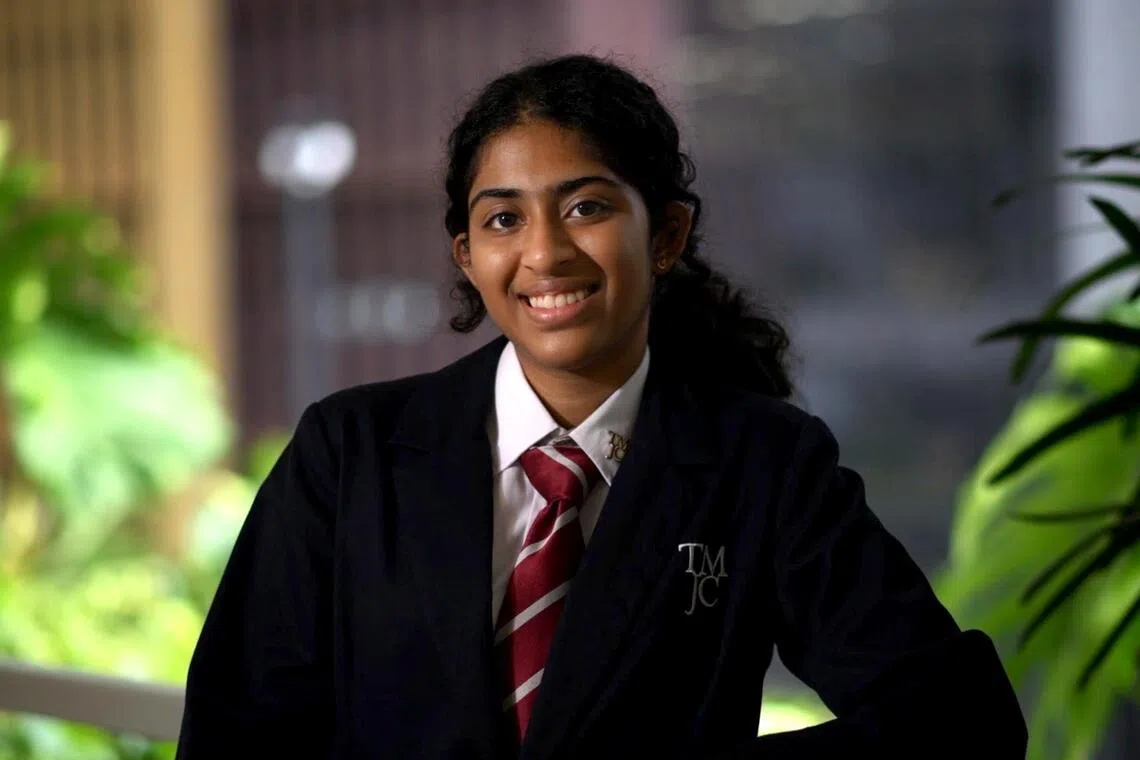
A 17-year-old student created an air quality monitor to help her and her sister manage their allergies. The device tracks dust particles and sends data to an Internet of Things-based platform. She won a scholarship for her strong science skills and passion for engineering.
Sahana, a 17-year-old student, created a device that tracks dust particles in the air to help her and her sister manage their allergies. The device sends data to a platform where Sahana can view information about the air quality. This helps them take simple preventative measures to reduce their exposure to dust and manage their symptoms.
Analysis
Background
Sahana Ramprasad, a 17-year-old student from Tampines Meridian Junior College, has always been fascinated by science and technology. Her interest in these fields was sparked by her allergies, which made her realize the importance of understanding the world around her. Sahana's allergies were triggered by dust particles in the air, and she knew that she needed to find a way to manage them effectively.
The Project
Sahana developed an air quality monitor using a microchip and sensor to track dust particles in the surrounding air. The sensor sends data to an Internet of Things-based platform, where Sahana can view information such as the concentration of air particles and the estimated air quality index. This device has been instrumental in helping Sahana and her sister manage their allergies by identifying when dust levels may be higher and taking preventative measures to reduce their exposure.
The Scholarship
Sahana's project and her strong science skills earned her a spot among the 200 recipients of the Ministry of Education's Engineering and Tech Programme Scholarship (ETPS). This scholarship is given to pre-university students with a solid foundation in mathematics and science and a strong desire to further their study into interdisciplinary and real-life applications. The award spans two years, providing Singaporean students with an annual allowance of $1,000 and school fees, as well as a one-week ETPS workshop and a work attachment or internship programme during the June or December holidays in their second year of scholarship.
Implications
Sahana's project has several implications for the field of engineering and beyond. Firstly, it highlights the potential of engineering to solve real-world problems, particularly in managing allergies. Secondly, it showcases the importance of nurturing young talent in science and technology. By providing scholarships and opportunities for students like Sahana, we can encourage more young people to pursue careers in these fields and make a positive impact on society.
Key points
- Sahana Ramprasad, 17, developed an air quality monitor to track dust particles and manage her and her sister's allergies effectively.
- She won the Ministry of Education's Engineering and Tech Programme Scholarship for her strong science skills and passion for real-life engineering applications.
- The scholarship provides students with an annual allowance of $1,000 and school fees, as well as a one-week ETPS workshop and a work attachment or internship programme.
- Sahana's project highlights the potential of engineering to solve real-world problems, particularly in managing allergies.
Sahana's project has the potential to inspire more young people to pursue careers in science and technology. With the right support and resources, she can continue to develop innovative solutions to real-world problems and make a positive impact on society.
However, Sahana's project also highlights the challenges of managing allergies and the importance of taking preventative measures. If not managed properly, allergies can have serious consequences, and it is essential to continue researching and developing new solutions to address this issue.