How can future doctors blend clinical rigour with AI fluency and empathy?
Hong Kong's medical leaders emphasize that future healthcare professionals must combine clinical expertise with emotional resilience, AI proficiency, and a drive for sector transformation.
Intelligence analysis by Gemini 2.5 Flash
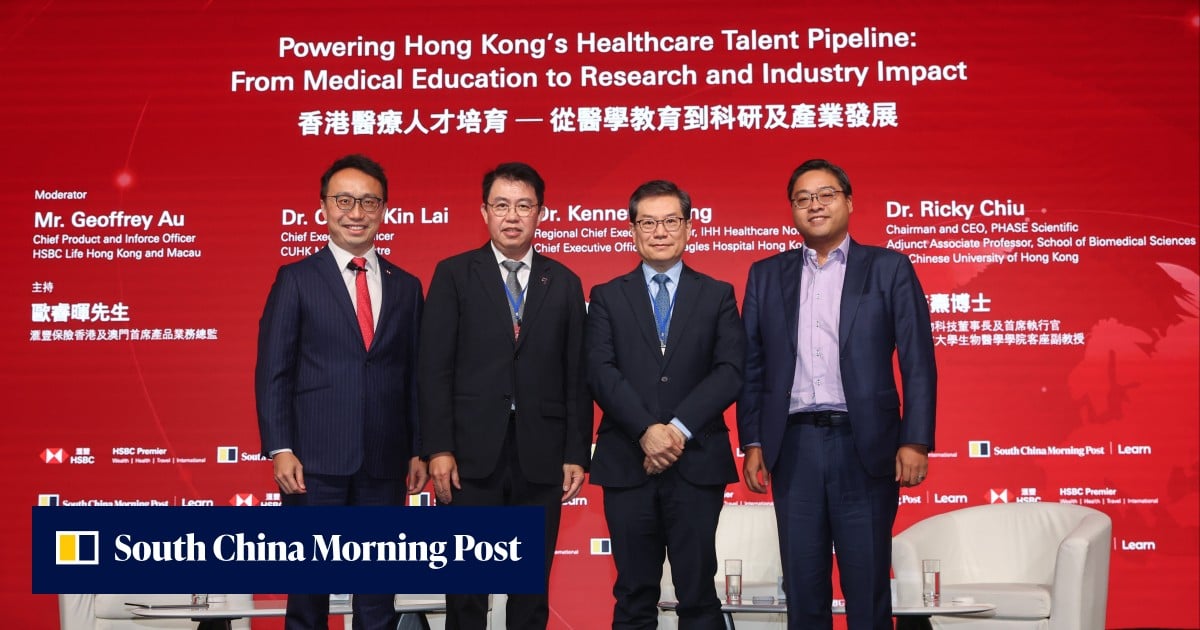
During the Global Education Summit, medical experts highlighted the evolving demands on Hong Kong's future doctors, stressing the need to integrate artificial intelligence with traditional clinical rigor and crucial soft skills to serve a broader regional population.
Imagine doctors are like super-smart detectives who help people get better. Soon, they'll also need to be really good at using clever computer helpers, called AI, to find clues faster and make decisions. But even with AI, they still need to be kind and understanding, like a good friend, so they can help lots more people, especially in big cities like Hong Kong and its neighbors.
Analysis
The evolving landscape of healthcare, particularly in a dynamic region like Hong Kong and the broader Greater Bay Area, necessitates a fundamental shift in medical education. The discussion at the Global Education Summit underscored that the traditional metrics for evaluating future doctors are no longer sufficient. Instead, a holistic approach that blends scientific acumen with technological literacy and human-centric skills is paramount for navigating the complexities of modern medicine.
Global Education Summit
The Global Education Summit, co-organised by the South China Morning Post and HSBC Premier, served as a crucial platform for addressing the future of talent development in various sectors, including healthcare. Bringing together approximately 5,000 policymakers, educators, and parents, the summit focused on regional talent development, the integration of artificial intelligence, and the evolution of academic pathways. This broad scope highlights the interconnectedness of technological advancements, educational strategies, and societal needs in shaping the workforce of tomorrow, particularly in critical fields like medicine.
Dr Chung Kin-lai
Dr. Chung Kin-lai, the chief executive officer of CUHK Medical Centre, provided a key perspective on the expanding role of Hong Kong's medical professionals. He noted the increasing trend of people seeking medical services in Shenzhen, framing it not as a challenge but as an opportunity for future doctors. Dr. Chung emphasized that Hong Kong's doctors would not merely serve the city's seven million residents but an expanded population of 18 million, implying the integration of Hong Kong's healthcare services within the Greater Bay Area. His remarks underscore the need for a broader regional outlook and the development of skills pertinent to cross-border healthcare provision.
CUHK Medical Centre
As a prominent institution, CUHK Medical Centre plays a vital role in preparing the next generation of healthcare talent for these changing demands. The insights shared by its CEO, Dr. Chung, reflect the strategic thinking required at an institutional level to adapt curricula and training programs. The emphasis on soft skills, alongside clinical rigour and AI fluency, suggests a move towards a more patient-centered and technologically informed medical practice. This adaptation is crucial for ensuring that graduates are not only clinically competent but also emotionally resilient and capable of leveraging advanced technologies to deliver high-quality care across an increasingly interconnected region.
Key points
- Future doctors in Hong Kong must combine clinical rigour, emotional resilience, and AI fluency.
- AI will not replace doctors but will reward those who effectively integrate it into their practice.
- Soft skills are becoming increasingly vital for healthcare professionals.
- Hong Kong's doctors are expected to serve an expanded regional population of 18 million, including Shenzhen.
- The Global Education Summit addressed the evolving demands on healthcare talent and education.
- Traditional metrics for evaluating future doctors are changing due to AI's impact on clinical workflows.
Hong Kong's proactive integration of AI and soft skills into medical education could establish a highly adaptable and efficient healthcare workforce. This approach has the potential to position the city as a leading medical hub, capable of serving a significantly larger regional population and fostering innovation in patient care across the Greater Bay Area.
The rapid evolution of AI in healthcare, coupled with the demand for new soft skills, poses significant challenges for traditional medical training. If educational institutions fail to adequately adapt curricula or if future doctors struggle to balance technological reliance with human empathy, it could lead to a decline in patient care quality or a shortage of appropriately skilled professionals.