Jackdaw approval is a step towards a grownup North Sea policy
The UK government has approved the Jackdaw gasfield, a move seen as a pragmatic step towards a more mature North Sea energy policy. This decision balances energy security and domestic production with the nation's net-zero commitments.
Intelligence analysis by Gemini 2.5 Flash Lite
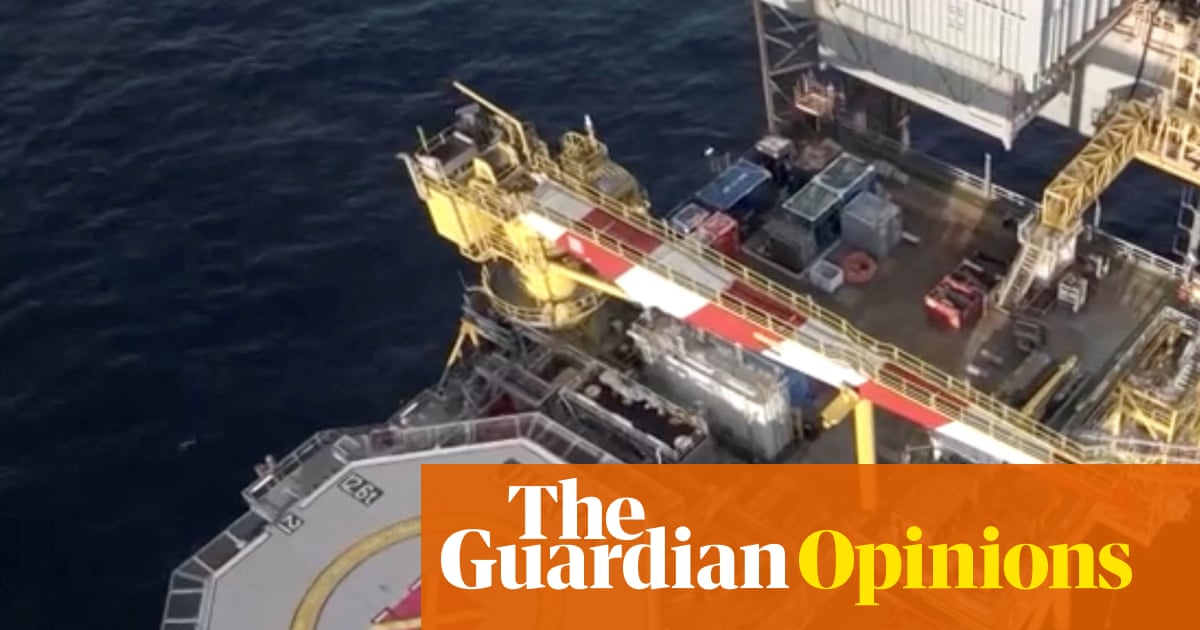
The approval of the Jackdaw gasfield signifies a pragmatic shift in UK energy policy, acknowledging the continued reliance on oil and gas for domestic needs while pursuing net-zero goals. It addresses concerns about energy security, import dependency, and the environmental impact of liquefied natural gas, positioning domestic production as a more sensible option.
Imagine the UK needs lots of energy, like electricity and heat, but not all of it can come from clean sources like wind and solar yet. So, it still needs to use some oil and gas. The Jackdaw field is like a local pantry for gas, meaning the UK can get it from closer to home instead of relying on gas that has to travel a very long way on ships, which is more complicated and can cause more pollution.
Analysis
Jackdaw Approval
The recent approval of the Jackdaw gasfield marks a significant, albeit incremental, step towards a more pragmatic and "grownup" energy policy for the United Kingdom. Prime Minister Andy Burnham's earlier assertion that "the question isn’t whether Britain will still be using oil and gas, the question is, where does it come from?" encapsulates the core dilemma. With oil and gas still providing a substantial 75% of the UK's energy in 2025 and a significant portion of that being imported, domestic production, even if modest, offers a tangible benefit.
The arguments favouring Jackdaw's development are rooted in practical considerations. Firstly, it directly addresses energy security concerns. The global energy market has become increasingly unreliable, with geopolitical events capable of disrupting supply routes. The Langeled pipeline, a primary conduit for Norwegian gas, represents a significant vulnerability. Domestic production, piped directly into the national network, offers a more secure and stable supply, mitigating risks associated with international shipping and geopolitical instability.
Secondly, the environmental argument for domestic gas is compelling when compared to imported liquefied natural gas (LNG). The process of chilling gas to -160C for shipment and then regasifying it at the destination incurs substantial carbon emissions. Given that a significant portion of UK gas imports already comes from sources like the US shale fields, utilizing lower-polluting North Sea gas is a more environmentally sensible choice, despite the overall continued use of fossil fuels. This approach acknowledges that the transition to net-zero by 2050 is a gradual process, with oil and gas playing a role for at least the lifespan of fields like Jackdaw, which is estimated at 11 years.
Net Zero Transition
The government's commitment to net-zero emissions by 2050, as insisted upon by Energy Secretary Miatta Fahnbulleh, remains a stated priority. However, the continued approval of new oil and gas fields highlights the complex balancing act involved. Credible pathways to net-zero acknowledge the necessity of using significant amounts of oil and gas during the transition period. This is underscored by the slow adoption of alternatives like heat pumps (fewer than 2% of households) and the continued dominance of petrol and diesel vehicles (nearly 95% of cars on the road).
Furthermore, industrial processes requiring high temperatures are still largely reliant on gas, with hydrogen and biomethane yet to gain significant traction. This reality necessitates a continued, albeit managed, domestic supply of fossil fuels. The approval of Jackdaw, and the potential for other "tie-back" fields like Tornado, suggests a strategy of maximizing domestic production within existing infrastructure while simultaneously investing in renewable energy sources through initiatives like the proposed "energy wealth fund."
North Sea Policy
The debate surrounding North Sea oil and gas, exemplified by the Jackdaw and potentially Rosebank projects, is fundamentally about determining the sensible level of domestic production on the UK's journey to net-zero. Current projections suggest that only about a third of consumption will come from domestic sources on a net basis, with even optimistic industry estimates suggesting this could rise to only half. This indicates that the UK is not aiming for a return to being a net exporter but rather a managed reduction in import dependency.
The approval of Jackdaw, which is expected to contribute 6% of UK North Sea gas production at its peak, is not a game-changer in terms of volume but is significant for its pragmatic alignment with energy security and emissions reduction goals. The government's directive to the regulator to consider urgent cases for similar measures suggests a broader strategy to optimize existing North Sea resources. While Rosebank, primarily an oil field, presents greater political challenges due to its higher pollution potential and longer production life, the underlying arguments regarding jobs, investment, and taxes remain relevant, albeit with a more pronounced environmental consideration.
Key points
- The UK government has approved the Jackdaw gasfield, a move seen as a pragmatic step towards a more mature North Sea energy policy.
- Domestic gas production is favored over imported liquefied natural gas (LNG) due to energy security and lower associated carbon emissions from transport.
- The decision acknowledges the continued, albeit decreasing, reliance on oil and gas during the transition to net-zero emissions by 2050.
- Jackdaw is expected to contribute 6% of UK North Sea gas production at its peak and has an estimated 11-year operational life.
- The government is considering similar measures for other potential North Sea gasfields, indicating a broader strategy for domestic energy production.
The approval of the Jackdaw gasfield could lead to a more stable and secure domestic energy supply for the UK, reducing reliance on volatile international markets. It also presents an opportunity to generate significant tax revenues and create jobs, while potentially lowering the carbon footprint compared to imported LNG, thereby supporting the nation's transition to net-zero.
Despite the approval, the continued reliance on fossil fuels, even domestically produced ones, delays the full transition to renewable energy sources. The Jackdaw field's output is modest and its 11-year lifespan means it is a temporary solution, potentially diverting investment and focus from more sustainable long-term energy solutions.