Moj Bafi, an ancient weaving tradition in heart of Zagros mountain range
Moj Bafi is a distinctive hand-weaving tradition in western Iran, reflecting the region's pastoral economy, indigenous textile knowledge, and artistic heritage. Produced from hand-spun wool, Moj textiles are known for their bold geometric patterns and traditional weaving …
Intelligence analysis by Llama
Moj Bafi is an ancient weaving tradition in western Iran, characterized by hand-spun wool and traditional weaving techniques. It reflects the region's pastoral economy and indigenous textile knowledge.
Moj Bafi is a special kind of fabric made by hand in Iran. It's made from wool and has cool patterns on it. People have been making it for a long time, and it's an important part of their culture.
Analysis
History of Moj Bafi
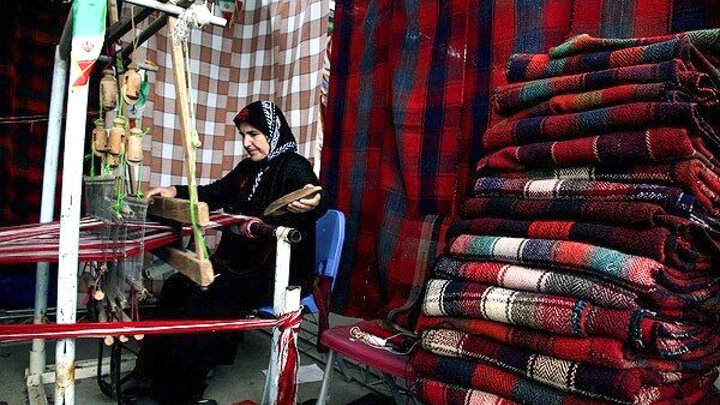
Moj Bafi is a woolen handwoven textile characterized by large checks and geometric motifs. Its warp and weft are traditionally made entirely from hand-spun wool obtained from sheep raised by nomadic and rural communities. The textile is woven on a simple traditional loom known as Chahar Verdi, making it a craft closely associated with the self-sufficient lifestyle of communities across the Zagros region.
Traditional Techniques
The traditional palette of Moj includes dark blue, blue, yellow, and red. The combination of these colors with geometric patterns gives the textiles a distinctive visual character while reflecting the aesthetic preferences of western Iranian weaving traditions. From household necessity to handicraft, Moj weaving was closely connected to household life rather than being regarded solely as an artistic occupation. In largely self-sufficient nomadic and rural families, producing bedding wraps was an important activity during periods of leisure and gradually developed into a traditional home-based craft.
Complexity of Patterns
One of the distinctive characteristics of Moj Bafi is the relationship between the complexity of its patterns and the number of shuttles used during weaving. Among traditional weavers, the quality and craftsmanship of a Moj textile are assessed partly by the number of shuttles employed simultaneously. Each color used in a pattern requires a separate shuttle, while points at which different colors intersect can also increase the number of shuttles involved. As a result, textiles featuring a greater number of colors and more intricate motifs generally require greater precision, time, and effort.
Key points
- Moj Bafi is a distinctive hand-weaving tradition in western Iran.
- It reflects the region's pastoral economy, indigenous textile knowledge, and artistic heritage.
- Moj textiles are known for their bold geometric patterns and traditional weaving techniques.
- The traditional palette of Moj includes dark blue, blue, yellow, and red.
- The number of shuttles used during weaving is an informal measure of the skill, complexity, and value of the finished work.
If Moj Bafi continues to be preserved and promoted, it could become a symbol of Iran's rich cultural heritage and attract more tourists to the region.
If the traditional techniques and skills required to make Moj Bafi are lost, it could lead to a loss of cultural heritage and a decline in the region's traditional crafts.