Singapore bank stocks are at record highs. Should you buy, hold or sell?
Singapore's three major banks — DBS, OCBC and UOB — have hit fresh records, prompting investors to weigh whether to buy, hold or sell. Analysts say the decision should hinge on investment thesis, not price action.
Intelligence analysis by Llama
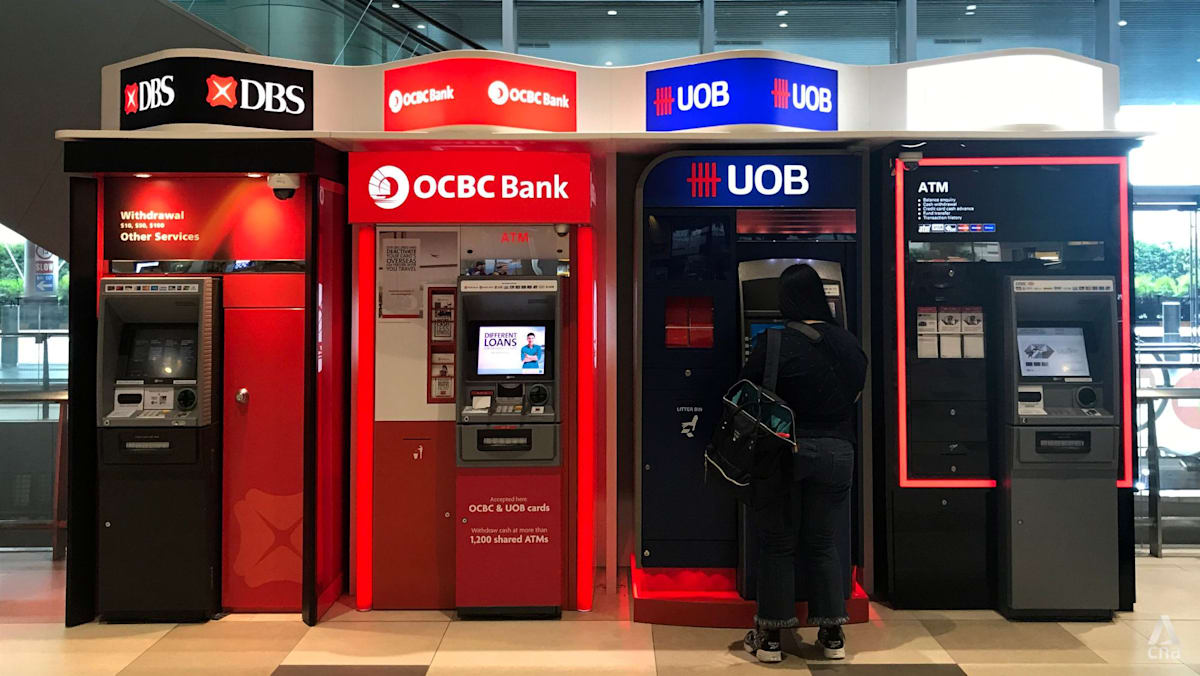
DBS, OCBC and UOB have all touched fresh records in 2026, leaving existing holders weighing profit-taking and newcomers fearing they have missed out. Analysts counsel sticking to the original thesis rather than reacting to charts.
Imagine three piggy banks belonging to DBS, OCBC and UOB, and they have all grown taller than ever before. Some people are wondering if they should put more coins in, and others wonder if they should take coins out. The grown-ups say: think about why you started saving in the first place, not just how full the piggy bank looks.
Analysis
A Tale of Three Banks, Three Different Climb Rates
DBS, OCBC and UOB are all in record territory, but the journey to the top has been uneven. DBS shares have advanced more than 27 per cent year-to-date to around S$72, OCBC has surged over 43 per cent to about S$28, and UOB has gained roughly 20 per cent, trading above S$42. The divergent pace matters because it changes the calculus for each stock individually — an OCBC holder sitting on a 40 per cent gain faces a very different psychological hurdle than a UOB investor up a more modest fifth. The rally itself has been fuelled in part by shifting interest rate expectations, with markets moving from anticipating rate cuts to pricing in stabilisation, a tailwind for net interest margins at the Singapore lenders.
The Thesis-vs-Price Framework
The most striking thread running through the three analysts quoted in the piece is the insistence that price is the wrong variable to anchor on. Mr Kenneth Tang of Amova Asset Management frames the choice as a function of existing exposure: heavy local-equity investors are "fairly positioned" and should not pile additional capital into banks, while disciplined accumulators should keep adding because the price action is, in his words, "affirming my own investment thesis." Mr Glenn Thum of Phillip Securities Research goes further, telling investors to "tune out the price action and anchor on the objective." Mr Eric Xiao of CMC Markets Singapore offers a practical stress test — write down the business change (dividend cut, bad-loan surge, capital erosion) that would trigger a sale before buying. If the seller cannot articulate that trigger, the buyer is not ready to act in either direction.
The Hidden Trap of Index Concentration
Mr Xiao also flags a quieter risk that is easy to miss for Singapore retail investors: anyone already holding a Straits Times Index ETF is, by construction, heavily exposed to DBS, OCBC and UOB. Adding direct bank positions on top of that ETF exposure doubles down on a single bet rather than diversifying. The article's framing suggests this is the kind of concentration mistake that "feels" like diversification. For dividend-focused investors, the 5-6 per cent expected yield combined with balance-sheet strength means the record price tag is not, by itself, a sell signal — but the article's central message is that without a clear thesis and exit criteria, both the FOMO buyer and the itchy profit-taker are exposed to the same trap of trading the chart rather than the business.
Key points
- DBS is up more than 27% YTD to around S$72, OCBC up over 43% to about S$28, and UOB up 20% to above S$42, all at fresh records.
- Analysts from Amova, Phillip Securities Research and CMC Markets all argue the buy/hold/sell decision should rest on the original investment thesis, not on record-level prices.
- Mr Eric Xiao's pre-commitment test: write down what business change — not price change — would force a sale; if the trigger cannot be named, the investor is not ready to act in either direction.
- Straits Times Index ETF holders already carry heavy exposure to the three banks, so adding direct positions can concentrate risk rather than spread it.
- The rally has been supported in part by shifting rate expectations, moving from anticipated cuts toward stabilisation, which underpins net interest margins.
Analysts quoted in the article believe the three banks can continue to perform well and that share prices could rise further over the long term, supported by stabilising interest rates and the lenders' balance-sheet strength. For income-focused holders, a 5 to 6 per cent expected dividend yield combined with capital resilience means record prices need not trigger a sale.
The article flags over-concentration risk for anyone who already holds a Straits Times Index ETF, since adding direct bank positions stacks exposure rather than diversifying it. Investors who cannot articulate a business-level exit trigger — a dividend cut, rising bad loans, or capital erosion — risk trading the chart and either buying at a top or selling prematurely.