What Does the UAE's Trade Suspension with Iran Mean?
The UAE has suspended all commercial and financial transactions with Iran, accusing it of firing ballistic missiles, a move that could severely impact Iran's economy given Dubai's role as a critical trade gateway.
Intelligence analysis by Gemini 2.5 Flash
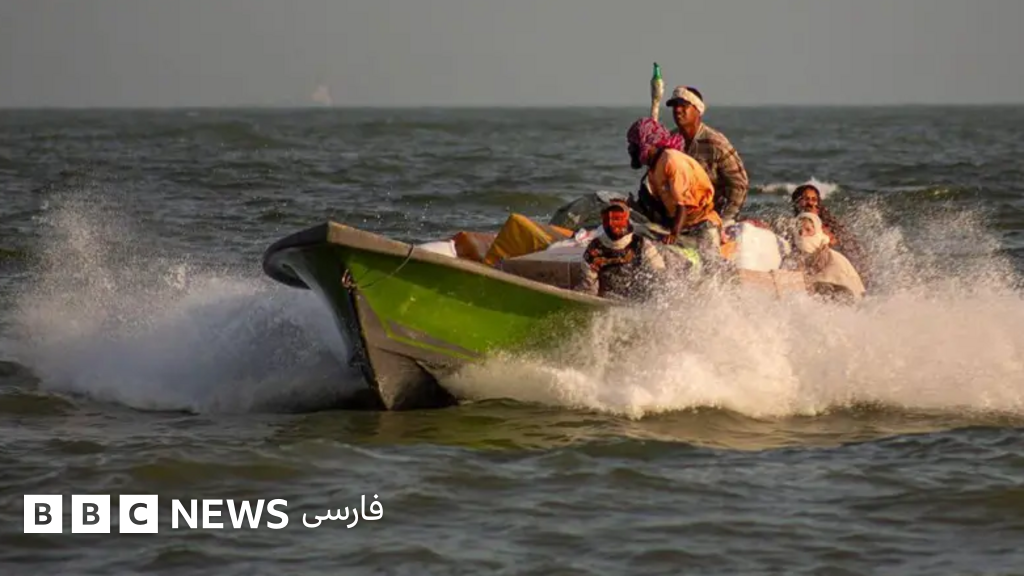
For centuries, Dubai has served as a vital commercial and financial link for Iran, enduring past sanctions and political tensions. However, recent accusations by the UAE of Iranian missile attacks have prompted an unprecedented suspension of all trade and financial activities, signaling a significant shift in the Emirates' approach from de-escalation to economic pressure, potentially …
Imagine Iran needs to buy and sell things with the rest of the world, like getting toys or selling its own special crafts. For a very long time, a big shopping mall and port in a place called Dubai, in the UAE, has been like its main door to do all this. But now, the UAE says Iran shot some pretend rockets near its ships, which Iran denies. So, the UAE has decided to close that big shopping mall door for Iran. This means it will be much harder for Iran to get and sell things, like trying to shop when all the stores are closed.
Analysis
The recent decision by the United Arab Emirates to suspend all commercial and financial transactions with Iran marks a significant escalation in regional tensions, potentially severing a trade lifeline that has persisted for centuries despite numerous political and economic challenges. This move, prompted by UAE accusations of Iranian ballistic missile attacks targeting maritime navigation, represents a departure from the Emirates' long-standing policy of balancing security concerns with lucrative commercial interests. Dubai, in particular, has historically served as Iran's primary conduit to global markets, facilitating imports and exports even under stringent international sanctions.
Jebel Ali Port
The historical trade relationship between Iran and the UAE, particularly through Dubai, predates the formation of the Emirates in 1971. Iranian merchants established strong ties, leveraging Dubai's strategic location and open trade policies. Over time, this evolved from traditional dhow trade to sophisticated container shipping and free trade zones, with Jebel Ali Port emerging as one of the largest commercial and re-export centers in the Middle East. Even during periods of heightened political tension, such as the Iran-Iraq War or UN Security Council sanctions, Dubai maintained its role as a crucial hub for Iranian goods. While trade volumes fluctuated, notably decreasing from $9.8 billion in 2011 to $6.8 billion in 2012 following intensified sanctions, the channel never fully closed, underscoring its resilience and importance.
Eli Al-Hindi
The current suspension, however, signals a fundamental shift in the UAE's strategy, moving from attempts at de-escalation to employing economic leverage. Eli Al-Hindi, an international relations expert based in Abu Dhabi, suggests that Gulf countries, which have built their economies on stability, open markets, and trade, would only sacrifice these interests if they perceived an "existential threat" to their nation. This perspective indicates the gravity with which the UAE views the alleged missile attacks and the broader regional instability. The decision was announced shortly after the expiration of a previous understanding between the US and Iran, and amidst signs of increased pressure from Washington on Tehran, suggesting a coordinated or at least strategically timed response.
30.6 Percent
The economic implications for Iran are substantial. According to World Trade Organization data for 2024, the UAE stands as Iran's second-largest trading partner after China and its largest source of imports, accounting for a significant 30.6 percent of all imported goods. Furthermore, the UAE is Iran's third-largest export destination. This highlights Dubai's critical role not just as a transit point, but as a direct and major trading partner. A full implementation of the trade suspension would not only disrupt the flow of goods but also severely impact Iran's access to financial transactions and global supply chains, potentially exacerbating its economic challenges and further isolating it from the international community. The long-term consequences could force Iran to seek alternative, potentially less efficient, trade routes and partners.
Key points
- The UAE has suspended all commercial and financial transactions with Iran, citing alleged ballistic missile attacks targeting maritime navigation.
- Iran denies the accusations, calling them "baseless."
- Dubai has historically been a crucial trade and financial gateway for Iran, maintaining ties despite decades of sanctions and political tensions.
- The UAE was Iran's second-largest trading partner and its largest source of imports (30.6%) in 2024, according to WTO data.
- This decision marks a shift in the UAE's approach from de-escalation to using economic leverage, driven by a perceived "existential threat" from regional instability.
The suspension of trade and financial transactions by the UAE could severely cripple Iran's economy, cutting off its largest source of imports and a major export destination, further isolating it from global markets. This move also signals a dangerous escalation of regional tensions, potentially leading to increased instability and further economic hardship for Iran.
Market signals
- OIL Regional instability and disruption of maritime transport in the Persian Gulf, as described in the article, typically lead to higher crude oil prices.
AI-generated analysis of potential market relevance. Not financial advice.