South Koreans ‘intoxicated by stocks’ swarmed market frenzy – and lost everything
A 30% decline in South Korea's Kospi benchmark has caused widespread financial losses and psychological trauma among retail investors, raising concerns about the nation's market stability.
Intelligence analysis by Gemini 2.5 Flash
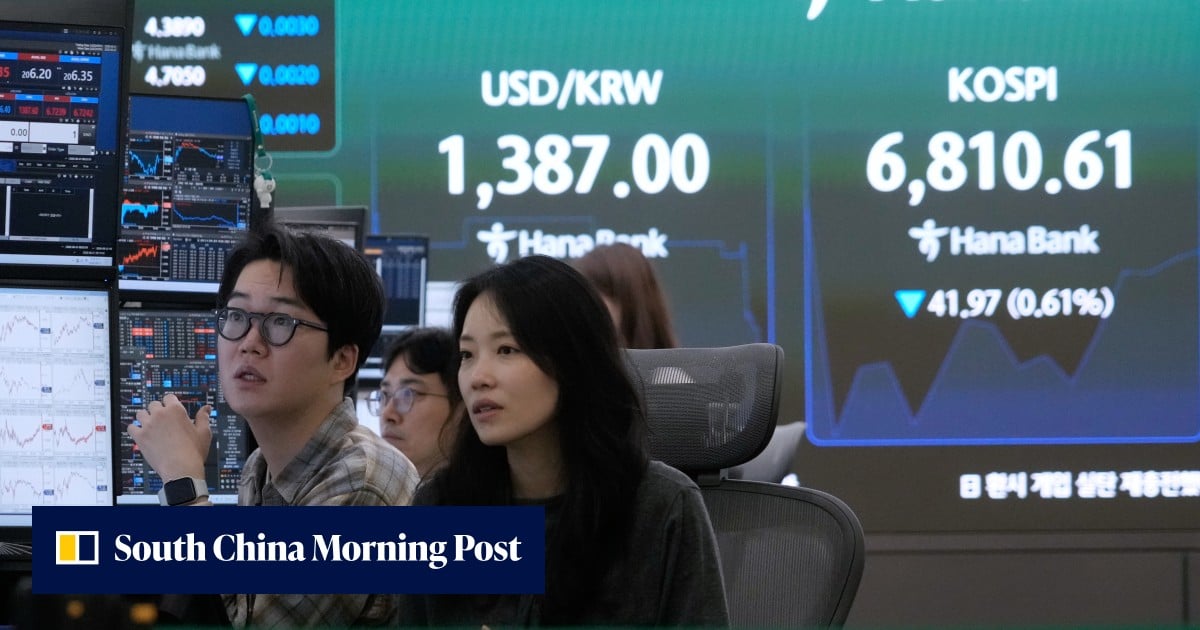
South Korea's attempt to invigorate its stock market by encouraging bolder investments backfired, leading to a significant market rout that left many retail investors, known as 'ants,' with severe losses and emotional distress, creating political challenges for the government.
Imagine a lot of grown-ups in South Korea got super excited about buying tiny pieces of companies, like collecting special cards. They thought they'd get rich quickly, so they bought more and more, sometimes even borrowing money to do it. But then, the value of these company pieces suddenly dropped a lot, like when your favorite toy breaks. Many grown-ups lost their money and felt very sad and stressed, and now the country is trying to figure out how to help them and stop it from happening again.
Analysis
The recent 30 per cent plunge in South Korea's Kospi benchmark has unleashed a wave of financial devastation and psychological distress among the nation's retail investors. What began as a vision to inject dynamism into the market, shedding regulatory constraints and encouraging bolder bets, has instead culminated in widespread trauma that analysts believe could take years to overcome. This sharp decline has not only wiped out significant wealth but also cast a critical spotlight on the underlying vulnerabilities within South Korea's economic system, particularly its propensity to channel individual investors into complex, often poorly understood, leveraged financial products. The emotional toll is palpable, with reports of rising demand for psychiatric help and even extreme incidents like an alleged stabbing linked to stock losses, underscoring the profound societal impact of this market rout.
Kospi benchmark
The dramatic 30 per cent decline of the Kospi benchmark since its peak on June 19 represents a significant setback for South Korea's financial landscape. This sharp contraction has directly impacted the portfolios of millions of retail investors, many of whom were drawn into the market by the earlier euphoria and promises of quick gains. The scale of these losses, both realized and on paper, has created a pervasive sense of disillusionment and financial insecurity across the nation.
Beyond the immediate monetary impact, the Kospi's performance has ignited a broader debate about the stability and maturity of South Korea's capital markets. Critics argue that the system, despite the nation's status as a tech powerhouse, still exhibits characteristics of an emerging market, particularly in its susceptibility to speculative retail investor behavior. This raises questions about the country's aspirations for developed market status and the reforms needed to foster more resilient and responsible investment practices.
Jeon Suk-jae
Jeon Suk-jae, a prominent YouTuber with 3.7 million subscribers on his investment channel, has become a barometer for the shifting national mood. His observations highlight the rapid transition from widespread market euphoria to profound gloom among retail investors, mirroring the trajectory of the Kospi itself. Videos on his channel, such as “the entire nation is intoxicated by stocks,” initially captured the speculative fervor that gripped the country.
Now, the comments sections on his videos are filled with expressions of despair and regret, reflecting the severe losses suffered by his audience. Jeon's insights underscore the psychological reckoning currently underway in South Korea, where the financial downturn has translated into a significant mental health crisis. His platform serves as a stark reminder of the human cost associated with unchecked market speculation and the emotional fragility of investor confidence.
President Lee Jae Myung
The market rout has significant political ramifications for President Lee Jae Myung’s government, placing it under intense scrutiny. The administration's initial push to invigorate the stock market, intended to reflect South Korea's economic dynamism, has instead resulted in widespread public discontent. The perception that the government's policies inadvertently fueled a speculative bubble, leading to the current crisis, could erode public trust and support.
Addressing the investor trauma and the broader economic fallout will be a critical challenge for President Lee's leadership. The government faces pressure to implement measures that not only stabilize the market but also protect vulnerable retail investors from future excesses. How the administration navigates this crisis will likely shape its political standing and influence future regulatory approaches to financial markets in South Korea.
Key points
- South Korea's Kospi benchmark declined 30% since June 19, causing widespread losses for retail investors.
- The market frenzy, fueled by regulatory changes, led many 'ants' (retail investors) into leveraged products.
- The downturn has resulted in rising demand for psychiatric help and incidents of stress-related crime.
- The situation has created political challenges for President Lee Jae Myung's government.
- Experts believe the investor trauma could deter future investment for years.
The widespread financial losses and psychological trauma could lead to a prolonged period of investor aversion to the stock market, hindering capital formation and economic growth. This could also exacerbate social tensions and place significant pressure on the government to address the fallout, potentially leading to overly restrictive regulations that stifle future market development.